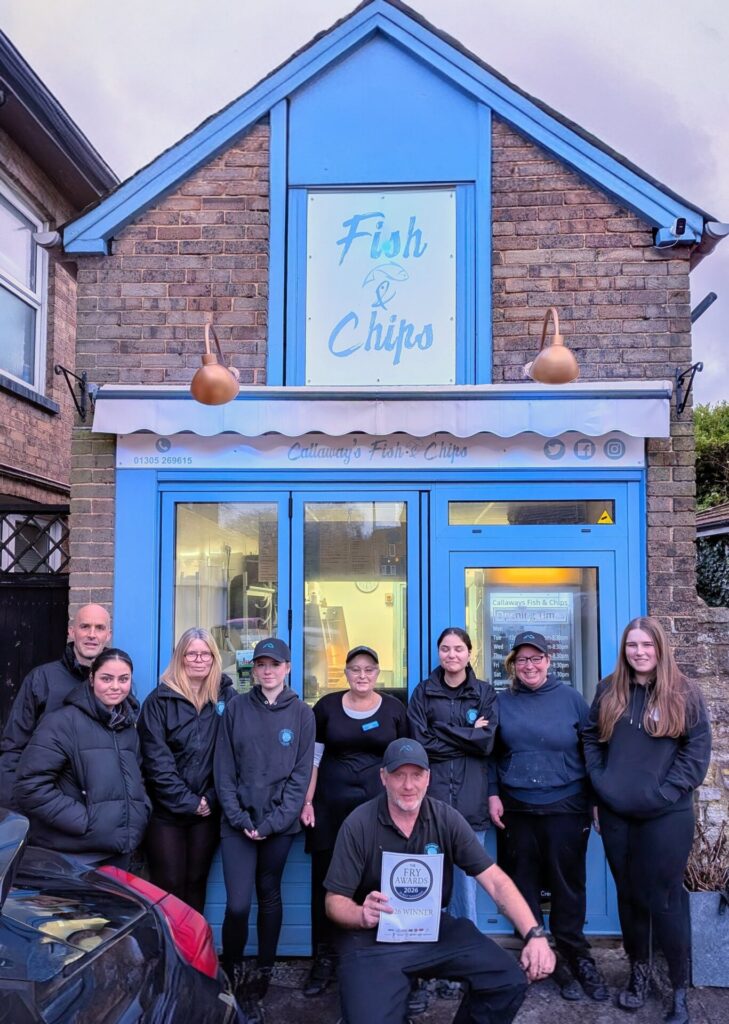
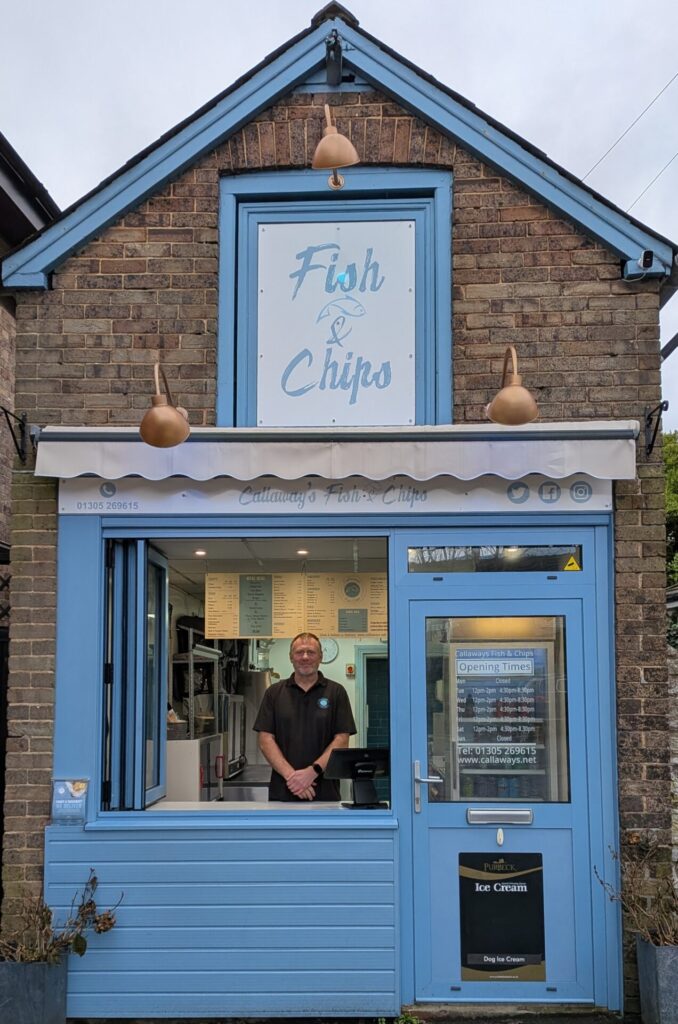
An unassuming takeaway in a space no bigger than a single car garage achieved 100% in both mystery visits to win a spot in the Fry 50 Best Fish & Chip Takeaways Award. Ian Callaway, owner of Callaway’s Fish & Chips in Dorchester, Dorset, talks about what it took
Callaway’s has been entering The Fry Awards annually since 2019, two years after Ian took over the business. Each year it has made the 50 Best, with one exception when Ian simply forgot to enter. Even so, he admits that every time the results come around, he braces himself for disappointment. “Ever since, I’ve thought this might be the year we don’t make it,” he says. “But then this year we got 100% twice, which is just mad. Last year we got 98 and 99%, and I thought that was incredible.”

For Ian, the motivation to enter the awards was never about trophies or headlines. From the outset, it was a practical decision as Ian explains: “The very first time I entered, it was just to get some feedback, to get that mystery shop and see what we’re doing right and what we’re doing wrong, and then let the staff see the reports. We could say, ‘We could be doing this better,’ and talk about it, and then try to improve.”
That focus on improvement has become part of the culture at Callaway’s. The Fry Awards reports are shared with the team, discussed openly, and used as a basis for change. “I’m really proud of everyone,” Ian says. “It shows that when I talk to my team about how we should be doing things, they listen. But at the same time, I’m happy to take on board their point of view, because they’re packing food and serving customers far more than I am. I’m at the fryer most of the time.”
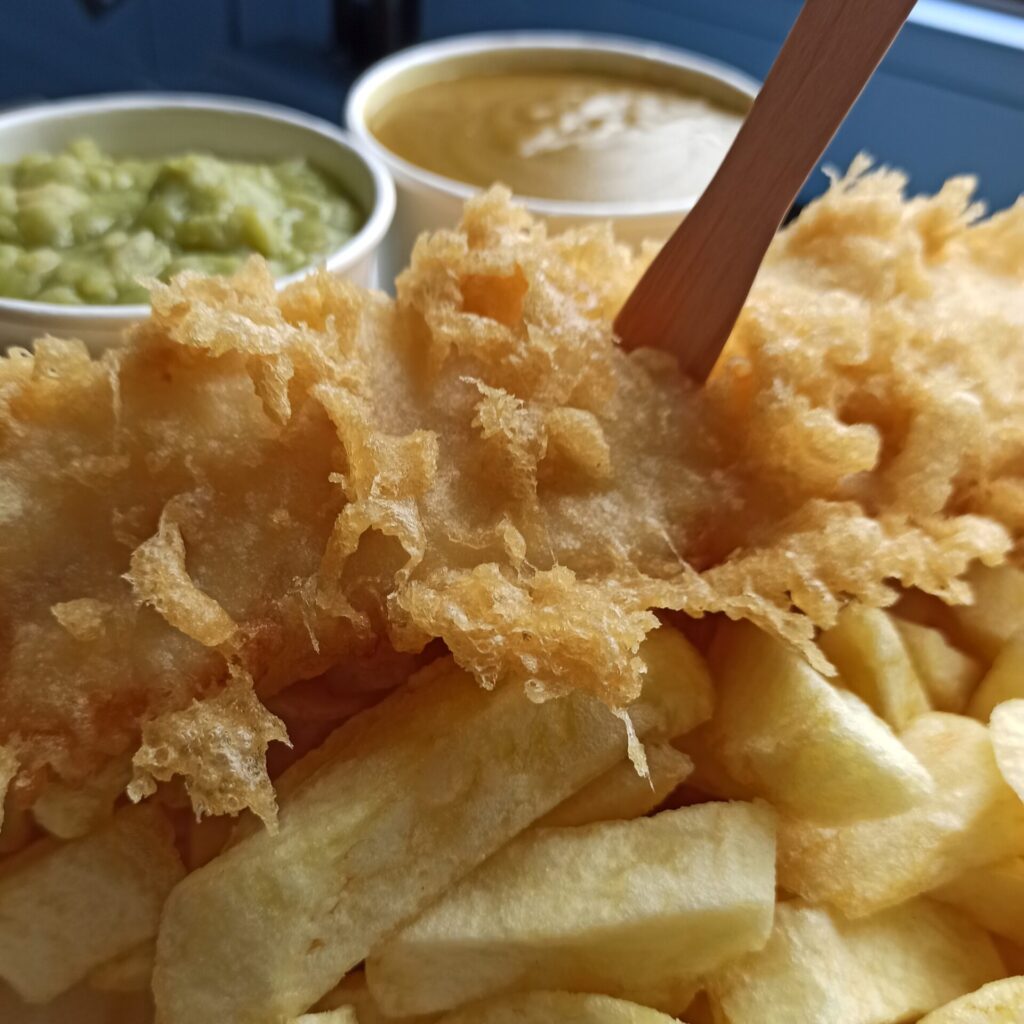
His team is small and mixed, with a couple of permanent staff and several school-age employees. Despite their age, Ian believes their attitude makes the difference. “Our feedback from the judges was fantastic, we had comments like “greeted in a friendly manner”, “batter has the perfect thickness”, “fish was moist with large meaty flakes and no grease” and “chips were golden, fluffy and fairly even in size”. I guess that just shows everybody in the team is doing their bit.”
The timing of the award announcement was also welcome, with Ian adding: “It’s a good way to start the year, isn’t it? We’ve got some offers planned later in the month and in February, so this helps tie us over for a bit.”
History
Callaway’s has an interesting history: once a cart shed for a horse-drawn cart, for the past century it has operated as a fish and chip shop. “I’ve spoken to customers who went there to get scraps when they were kids during the war,” Ian says.

The size of the shop has dictated much of how the business operates. “We’ve kind of adapted to the size,” Ian explains. “We serve at the window. During Covid that’s what we were doing anyway, and in 2021 when we put a new range in, instead of it running across the back of the shop, we had it running the length. We thought we’d carry on serving at the window and give ourselves a bit more room to pack and move about.”
Dorchester is not short of competition. There are two other fish and chip shops nearby, one just a five-minute walk away. Ian isn’t too proud to admit he has “fairly stiff competition” from both shops, having tried their food several times.
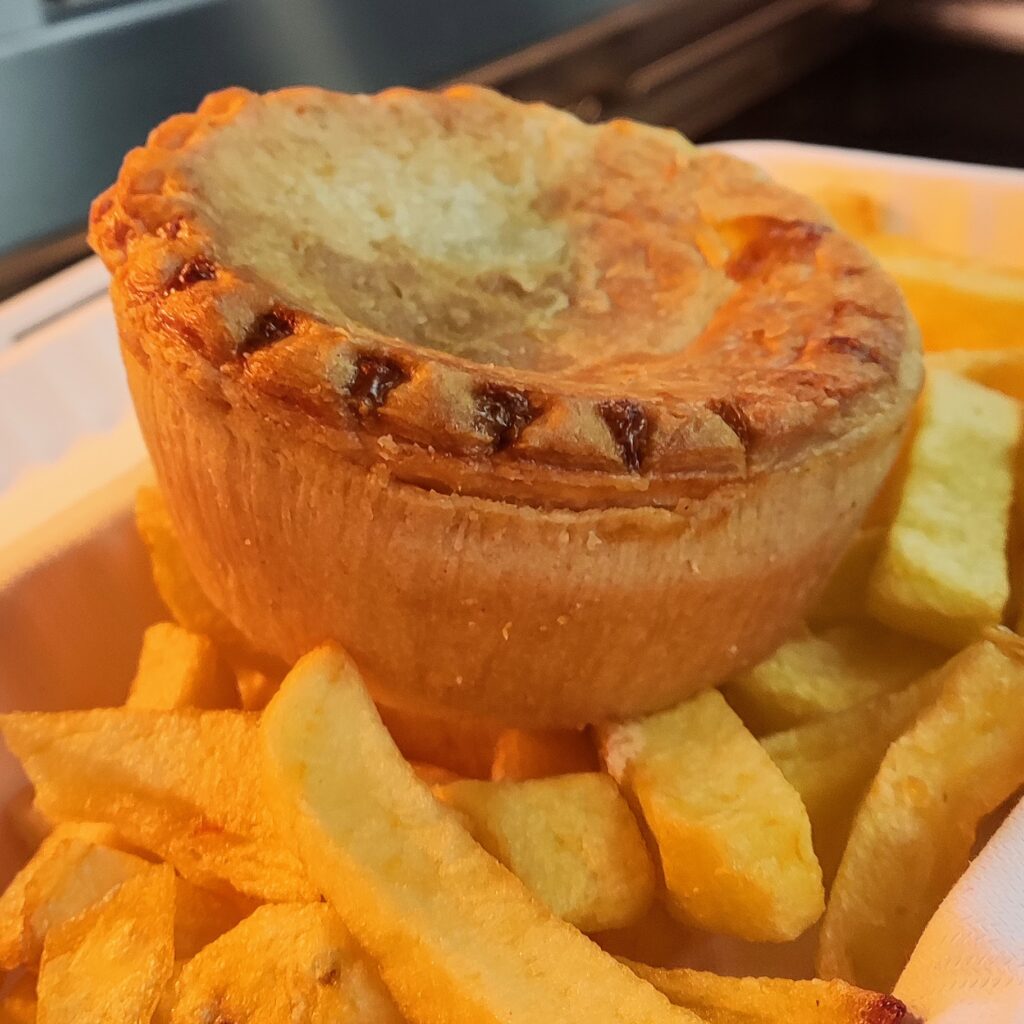
Standing out, then, has been crucial and has involved a series of deliberate choices. Early on, Callaway’s committed to cooking everything to order, something the other shops were not doing at the time, and while others continued to wrap, Callaways moved to boxes. The menu has also expanded, particularly around vegetarian and vegan options, as Ian explains: “We’ve got more than your average chippy. It brings in customers who might have a vegan in the family, although it does make things more challenging when it gets busy.”
A benefit of changing the range configuration meant having more kitchen space, which Callaway’s has utilised to make more homemade items like fishcakes, halloumi which is cut fresh and battered in-house, and tartare sauce. “We’re the only ones who make our own tartare sauce,” he says. After attending an NFFF training course, where Ian tasted a version made by David Miller, he was converted. “I always said I didn’t like tartare sauce, but now I love it and it’s on the menu and very popular.”
There’s also room now to accommodate two small tabletop fryers to handle items like squid and prawns. “We haven’t got much room, we’ve only got a three pan range, so items like that take pressure off the main fish pan,” Ian explains.
Customer habits
Customer habits have shifted noticeably in recent years. Lunchtimes remain steady, with people opting for smaller, lower-priced items, however, evenings, tell a different story with Ian noticing customers saving up. Large cod, priced at over £11, which with chips takes spend to £15, now sells more frequently than it once did. “Customers might not come in as often, but when they do, they have what they want and spend more,” says Ian.
Hake has been an area of experimentation over the past two years. Introduced as a lower-priced alternative to cod, it sells modestly week to week. A £5 hake and chips promotion, however, exceeded expectations. “The first time, I was a bit naive about how popular it was going to be,” Ian admits. “I ran out and had to drive to the supplier for more.” While margins were tighter, the promotion brought publicity and increased ongoing hake sales by around 25%.
Other £5 deals followed including chicken or a sausage, but none matched the appeal of fish and chips. Attempts to introduce more local or alternative fish species – south coast hake, gurnard and rock – also met resistance, largely due to price. “People just weren’t willing to try it at the price point we needed to charge. It was priced similar to cod, and they’d rather just have cod.”
Rising fish prices have been one of the biggest challenges. “A box of fish has basically doubled compared to a year ago,” says Ian. It’s meant prices instore have risen too, although Ian has held off when possible. “You don’t want to price yourself out. People still come, but they come less often,” he adds.
Sustainability has also been a priority here at Callaway’s. Soon after taking over, Ian worked to eliminate as much plastic as possible, switching sauce pots to cardboard before regulations required it. “We were plastic free for a while, but it’s not really possible to have none,” he says, noting the continued use of plastic water bottles after canned alternatives proved unpopular.
The customer base is largely local and loyal, with many visiting weekly or fortnightly. Tourism boosts trade during school holidays, and a strong Google rating helps visitors find the shop. Click and collect and delivery now account for more than half of sales, driven largely by older customers. “They aren’t typically the Deliveroo generation, but they’ve worked out we deliver and quite a lot order every week now,” Ian says. “It’s odd and it’s something I’m aware of.”
With this in mind, engaging younger customers is Ian’s next challenge. “They don’t eat fish and chips as much, but they do buy takeaways on apps and they want it delivered,” says Ian. How to reach them is still an open question. “Social media, maybe TikTok,” he says. “I need to look at trends and find things that are exciting and trendy for that generation.”
Recent Posts
- World Cup lifts pubs but restaurant sales dip in flat June for hospitality


- Takeaways and restaurants excluded from business rates cut
- Two chippies win one-to-one support from Frymax
- Bellingham and Rogers mural gives Birmingham chip shop a 30% boost to trade

- Fast food footfall falls as chicken continues to gain ground