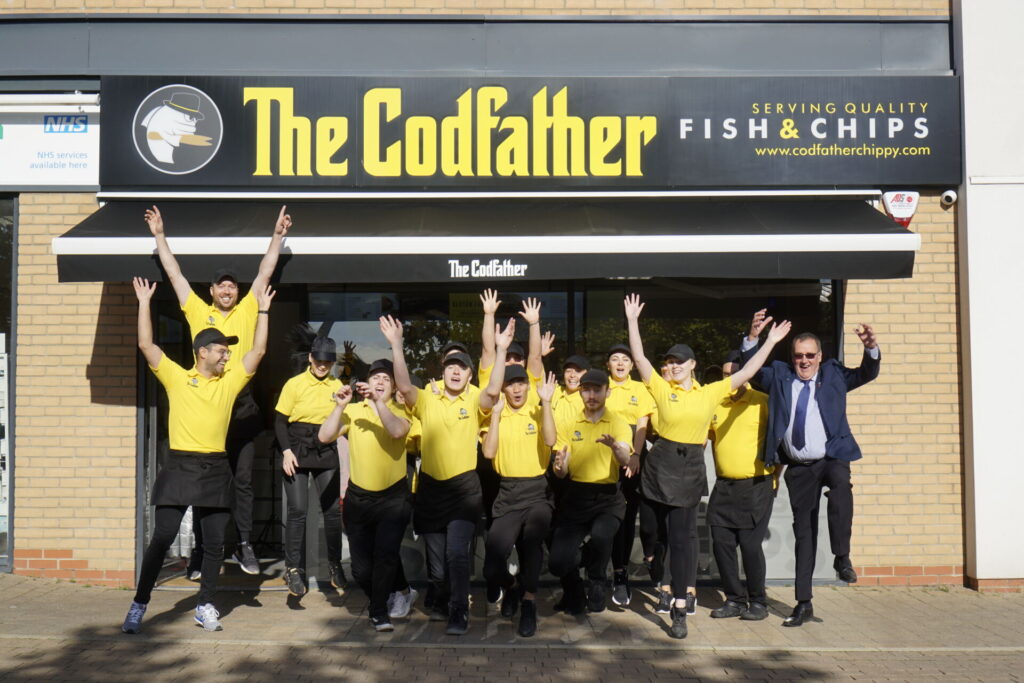
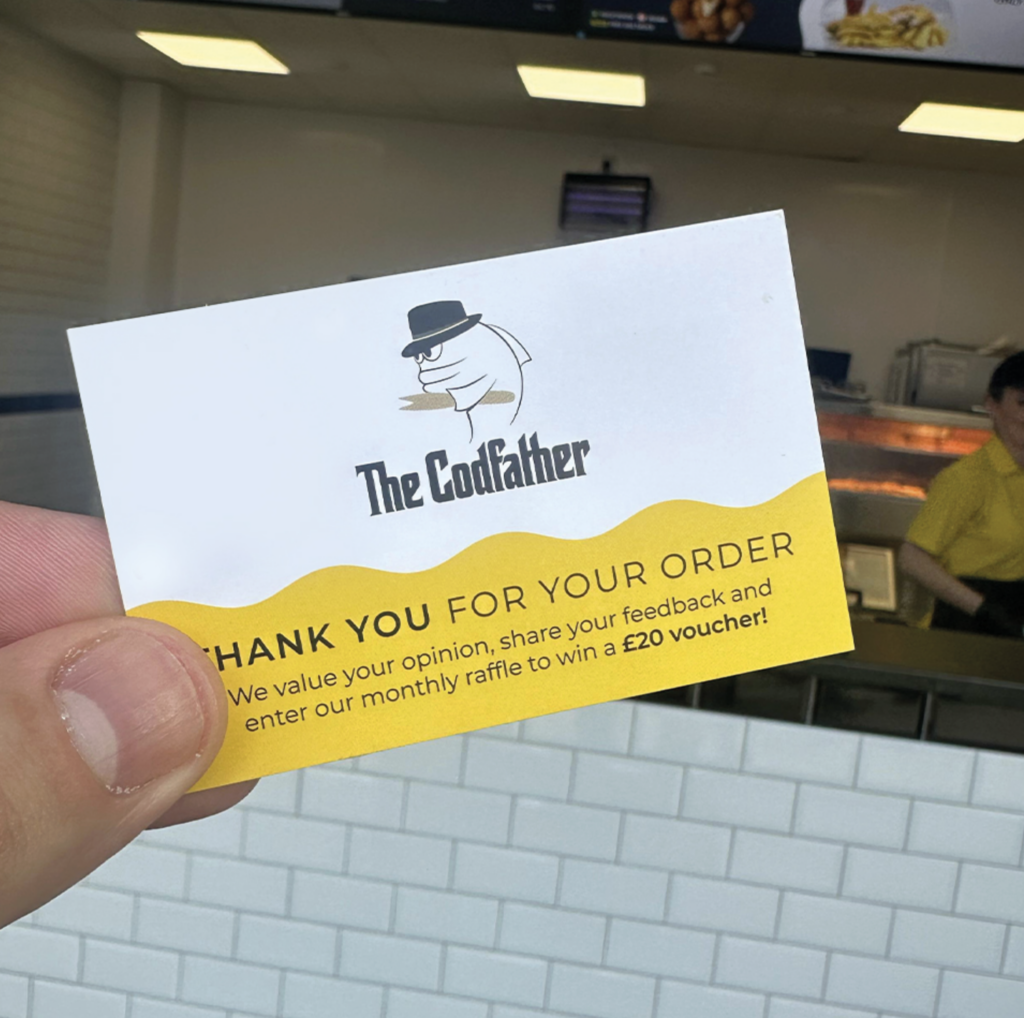
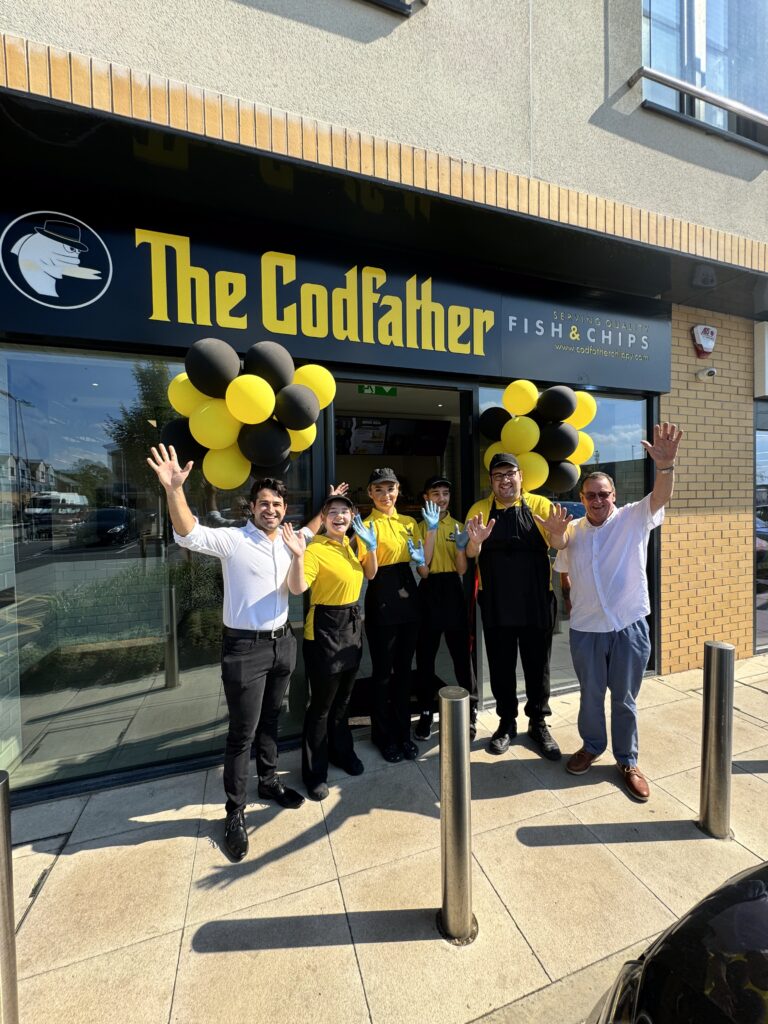
Rising fish prices forced The Codfather owner Juliano Britto to make a decision he never thought he’d face: removing cod from the menu at his three shops in Buckinghamshire and Bedfordshire. He explains why he took the step back in April, how customers have reacted and what it could mean for the future of fish and chips

Tell us a bit about your background in the fish and chip industry
I’ve worked in fish and chip shops since I was 15 and I’m now 34, so it’s all I’ve ever really known. I started out serving fish and chips, became a frier when I was about 18, and then bought the first Codfather on Jackson Road, Aylesbury, with my business partner when I was 21. We opened our second shop in Aylesbury in 2019 and our third in Houghton Regis in 2024, so I’ve grown up with the industry and know it inside and out.
Have you ever seen challenges like the industry is facing today?
I have seen all sorts of ups and downs over that time, but nothing like this. There have been times when potatoes have been difficult to source and prices have gone through the roof, but there has always been a way to manage those situations. What we’re seeing now feels very different because it’s not just fish prices, you’ve got rising wages, National Insurance increases, energy costs and all the other overheads that businesses are dealing with. When all of those things happen at once, it creates a real challenge.
Did you ever imagine there would be a day when The Codfather wasn’t selling cod?
No, never. When we opened our first shop, it would never have crossed our minds that we’d one day remove cod from the menu. It’s especially strange because it’s in our name. But the industry was very different back then. If you made good food, customers came through the door. Today there’s much more uncertainty and you have to work a lot harder for every sale.

How has customer behaviour changed since those early days?
It’s changed massively. Years ago, almost all of our customers were walk-ins. Now deliveries account for around 40% to 50% of our business, depending on the weather. People are happy to sit at home, order through the delivery platforms and pay a lot more, which is frustrating because you then think, well, why don’t they pay that little extra when they come in store?
What led you to take cod off the menu?
It was a really difficult decision because cod was our number one fish by quite a distance, but we spent months discussing it. Once the price of a box of fish went above £300, we knew we had to seriously think about what the future looked like. At the time we were asking ourselves whether it could reach £400 a box, and now that doesn’t seem unrealistic at all. What customers don’t always realise is that simply putting menu prices up doesn’t solve the problem. Unless we doubled the selling price, our margins were being squeezed more and more, as we were making less money on every fish we sold. Eventually, we reached a point where we realised that if cod stayed on the menu, people would continue ordering it. No matter how much we promoted alternative species, customers would naturally default to cod because that’s what they were familiar with. In the end, we felt we had to be brave enough to make a clean break and encourage people to try something different.
Did you explore other options before making the switch?
Absolutely. We tried different species and looked at what alternatives could work. Hake was already on our menu and selling reasonably well, and we also looked closely at pollock and plaice. Before making any decision, we did taste tests with customers, friends and staff and asked people to tell us what they thought they were eating.
What did those taste tests reveal?
It was really interesting because a lot of people couldn’t tell the difference. Some would identify pollock as cod, while others preferred hake. There wasn’t actually any cod in the tasting, but people were still picking those fish as their favourite. It reinforced our belief that if the fish is good quality and cooked properly, most customers will enjoy it.
How did customers react when you announced you were no longer selling cod?
There was definitely some shock at first. People would come in and say, “What do you mean cod’s gone?” So it became really important for us to communicate the reasons behind the decision. We made videos on social media, spoke to customers in-store and ran taste tests to show people we weren’t compromising on quality but were simply offering a different fish.
Have customers started to come around?
Many of them have. We always try to have little fish bites available for people to taste. We’ve found that customers who actually try the fish generally come back and order it again. The biggest challenge is convincing people to take that first step. Some customers are very attached to cod and don’t want to try anything else. They’re the hardest people to win over.
Has the change had any impact on sales?
Initially, yes. Deliveries were affected the most because people would go online looking for cod and chips, see it wasn’t there and leave without ordering. We thought, what can we do to overcome this, so we ran promotions, such as buy one pollock, get one free, or buy hake, get chips free. We also put the wording “fish and chips” on the menu and underneath it, we put the description of what the fish was. There was a dip at first, but we’ve gradually seen sales start to recover as more people become familiar with the new fish options. In-store, we have lost a few customers but we’ve gained on those who have tried the new species, and also by reducing and making it a more affordable fish and chips, we’ve gained customers on that front.

What difference does the switch make financially?
The margins are better on pollock, hake and plaice than they are on cod at current prices. That’s important for the business, but it’s also about affordability for customers as we want fish and chips to remain accessible. If the industry doesn’t adapt, I struggle to see how things continue in the long term. I don’t think many fish and chip shops can absorb fish prices approaching £400 a box while carrying on exactly as they always have.
So do you think more shops will move towards alternative species?
I think they will have to. There are lots of delicious species available, and I believe the industry needs to become more comfortable offering them. The more shops that do it, the more familiar those fish become to customers. At the moment, we’re standing out because we’ve made the move early, but if more businesses follow, it won’t feel unusual anymore.
When cod prices come back down, would you put it back on the menu?
It’s more about “if” rather than “when”, because I wonder if it will. And if it does, will it go back down to £150 a box, or will it come down to £300? If it did go back to the old price, then we definitely would, 100%. There’s no question about it, but if it doesn’t, then we just wouldn’t be able to survive.
Would you ever change the shop name?
We’ve been asked that a lot, but no. Someone used a great analogy recently that you don’t go into an Apple store expecting to come out with a bag of apples, and it’s the same for us. We’re called The Codfather, but customers don’t just come out with cod. We also sell burgers, but that doesn’t mean we’d rename ourselves The Burgerfather, so the name will stay.
What advice would you give to other fish and chip shop owners considering the same move?
I’d say just do it. It’s better for your customers because you’re offering them a more affordable piece of fish and it’s better for you because you’re improving your margins. I do truly hope everyone will move to it eventually, or even a good proportion of shops, so people become more familiar with all these different fish offerings. That’s how habits change, and I think that’s where the industry needs to head.
Recent Posts
- World Cup lifts pubs but restaurant sales dip in flat June for hospitality


- Takeaways and restaurants excluded from business rates cut
- Two chippies win one-to-one support from Frymax
- Bellingham and Rogers mural gives Birmingham chip shop a 30% boost to trade

- Fast food footfall falls as chicken continues to gain ground