Romaric Fry is putting his own stamp on fish and chips at his restaurant Fish & Fry’s in La Rochelle, France

When you think of the food scene in La Rochelle, France, oysters, mussels and fresh seafood are probably the first things that come to mind. As one of France’s best-known coastal cities, seafood is a huge part of its identity, with restaurants serving everything from shellfish platters to the day’s catch hauled in by local boats.
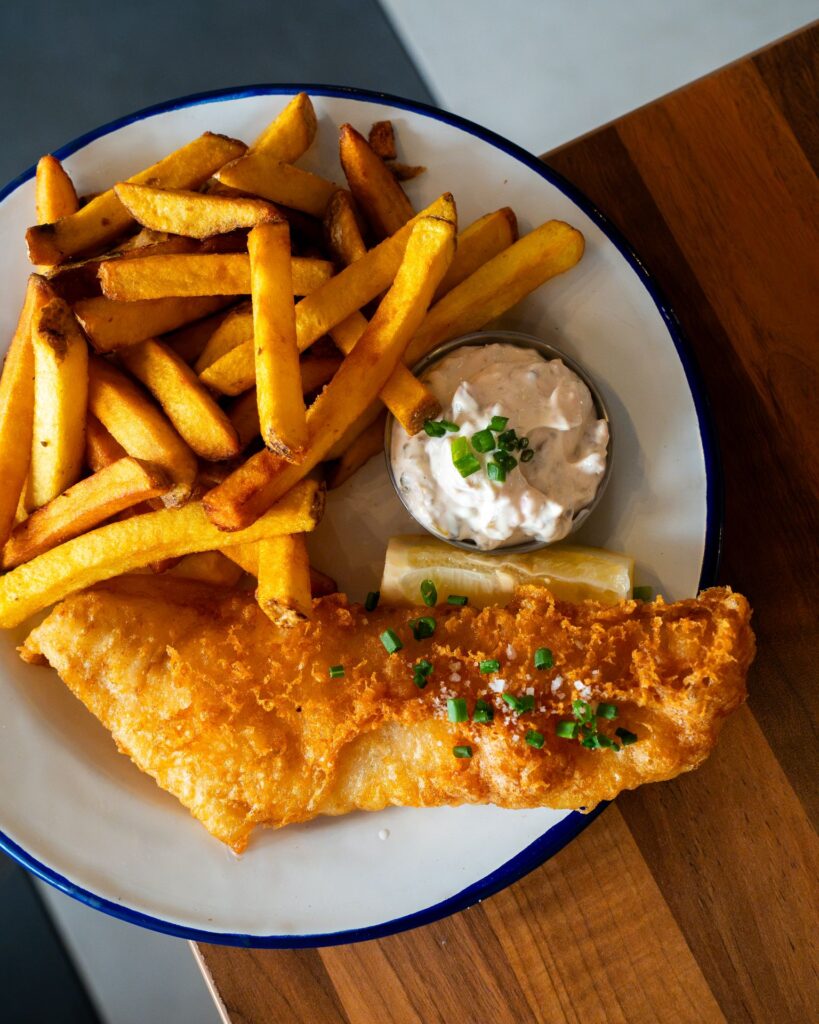
But tucked away among the city’s many seafood restaurants is someone doing something a little different. Romaric Fry has spent the last year building a reputation around one of Britain’s most recognisable dishes – fish and chips. Inspired by traditional British recipes but adapted with his own ideas and techniques, he’s proving there’s room for a specialist fish and chip shop, even in one of France’s most competitive dining destinations.
The irony of his surname isn’t lost on Romaric either, who says: “I wanted to open a burger restaurant originally. Then I found this little fish and chip shop. The person I was going into business with decided not to continue, but I saw an opportunity. The fish and chips themselves were good, but the business management was very poor. The kitchen was dirty, there were no welcoming smiles for customers, and there was no focus on providing a high quality customer experience. I thought the idea could work if it was done properly. Looking back, with my name being Fry, maybe it was meant to be.”
Born in Canada
Fish and chips wasn’t something Romaric knew particularly well when he took over the business. Born in Canada to a Canadian father and French mother, he had enjoyed good fish and chips back home, but it was during a year studying hospitality in England that he became familiar with the dish.
Working at Hotel du Vin in Birmingham while attending hospitality school linked with Stratford-upon-Avon, he tried fish and chips several times during his stay. His reviews were not positive however. ”I know there are some excellent fish and chip shops in the UK but I didn’t happen to find them,” he explains. “The ones I tried weren’t great. It’s the same in France. There are a few restaurants doing very good fish and chips, but most of them are bad because they haven’t researched how to perfect fish and chips. That made me think there was an opportunity to create something really good if I specialised in fish and chips.”
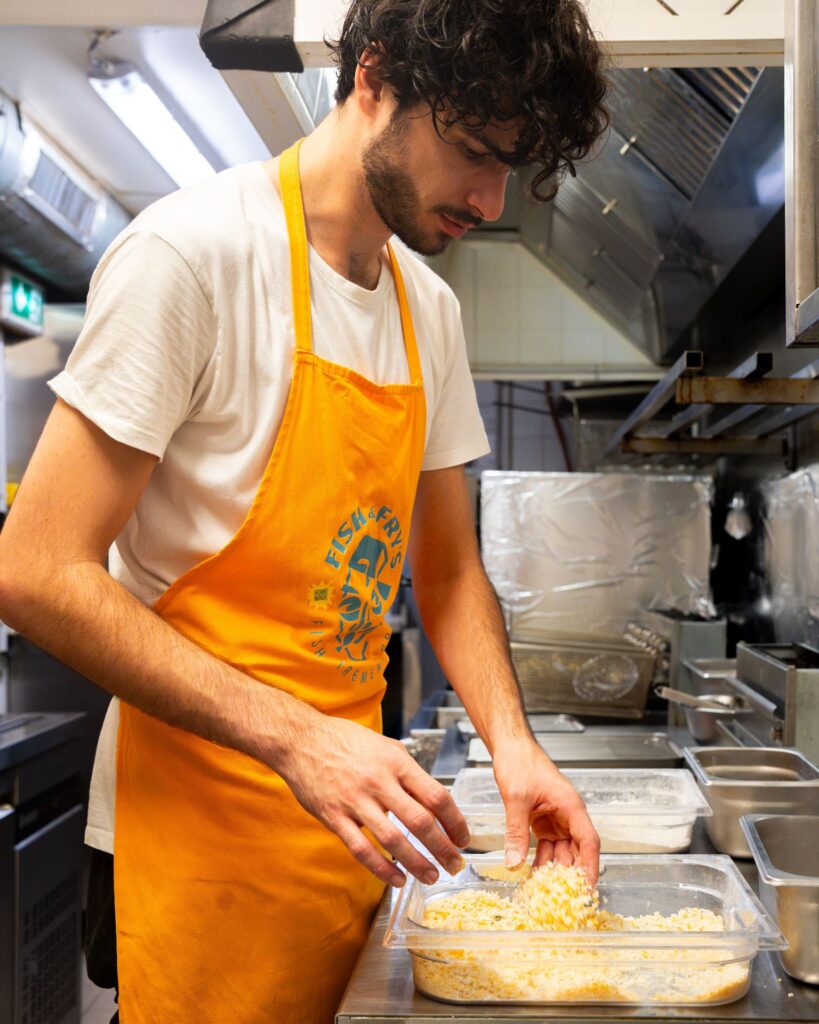
Rather than simply copying British fish and chips, Romaric spent time researching recipes from British chefs before developing his own batter. The one he settled on uses a blend of flours, beer, sparkling water and one closely guarded secret ingredient but, more importantly, it is made little and often. “I only make enough batter for seven or eight portions at a time. After that, I make a fresh batch. It only stays at its best for about 30 minutes, so I can’t make it once and use it all day.”
When it comes to fish, it’s haddock that made it onto the menu, with Romaric explaining: “I tested different fish and found haddock worked perfectly with my batter. I want the batter to stay really crisp while the fish melts in your mouth. Haddock gives me that because the fillets are thinner, so the batter cooks exactly how I want it.”
His fish is bought fresh from La Rochelle’s fish market and comes from French fishing boats. He has deliveries twice a week and if he runs out, he simply closes the shop rather than switches suppliers.
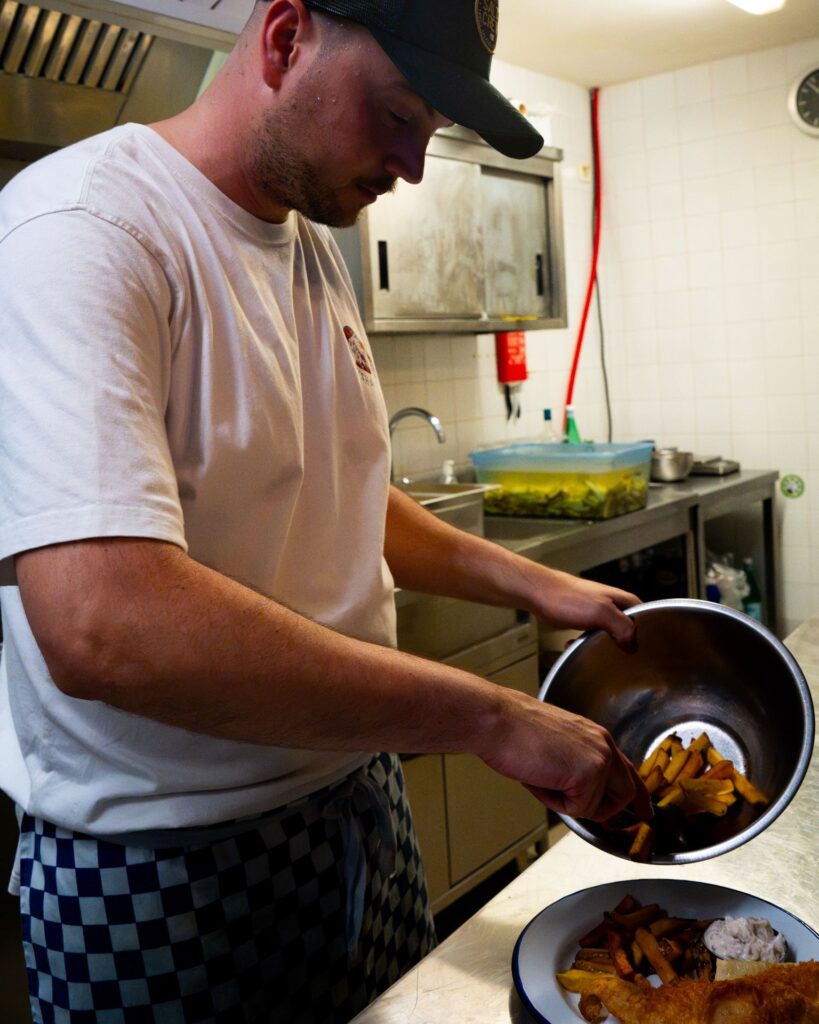
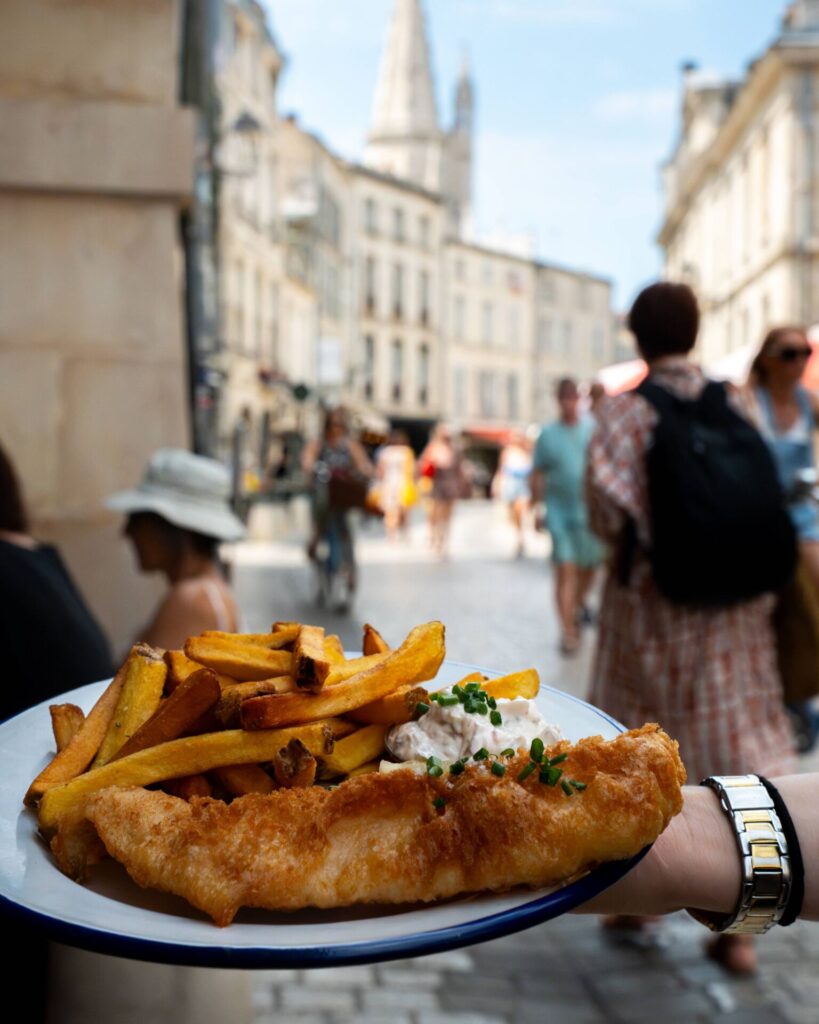
The chips also take a different route to the British norm. Instead of thick-cut chips, Romaric uses Agria potatoes from Brittany cut like a French fry and cooked skin-on using a Belgian double-cooking method.
“We cook them first at 150°C, let them cool completely, then fry them again at 190°C during service. It gives a really crispy result. That’s one of the biggest differences between my fish and chips and traditional British fish and chips.”
Another difference is the equipment, with Romaric working on standalone fryers. He comments: “I’ve seen videos of shops in the UK using the large frying ranges, and maybe when we get a little more established I will look at them, but for now these work well. I can do six or seven fish and chips at a time, the problem comes when everyone arrives at the same time, then it’s hard to keep up, but that is the restaurant business.”
At €15.80 for fish, chips and homemade tartare sauce, he believes the meal offers strong value in a city where comparable restaurant mains often cost several euros more. He says: ”I want local people to come back again and again. That’s why I keep the price fair.”
Building that local customer base has been key. Although La Rochelle attracts plenty of visitors during the summer, Romaric says his business depends on regular trade throughout the year. “We have everybody – families, older customers, young couples, British visitors. The only group we don’t really see are students because they’re looking for something under €10. They’re more likely to buy a kebab.”
Business decisions
Being different has also meant making different business decisions. While many restaurants in La Rochelle close on Mondays, Romaric stays open, explaining: ”Monday is a good opportunity because so many places are shut. If people want to eat out, we’re here.”
He closes on Tuesdays and Wednesdays for most of the year, with Wednesday reserved for family time as French schoolchildren don’t attend school that day.
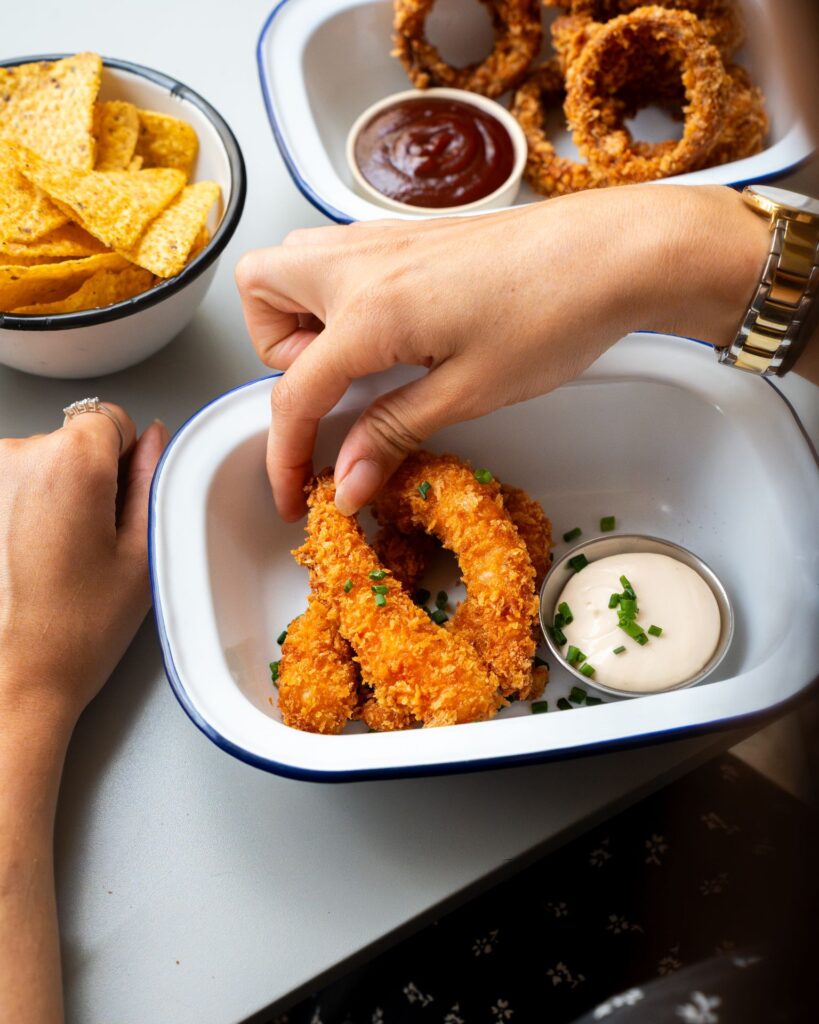
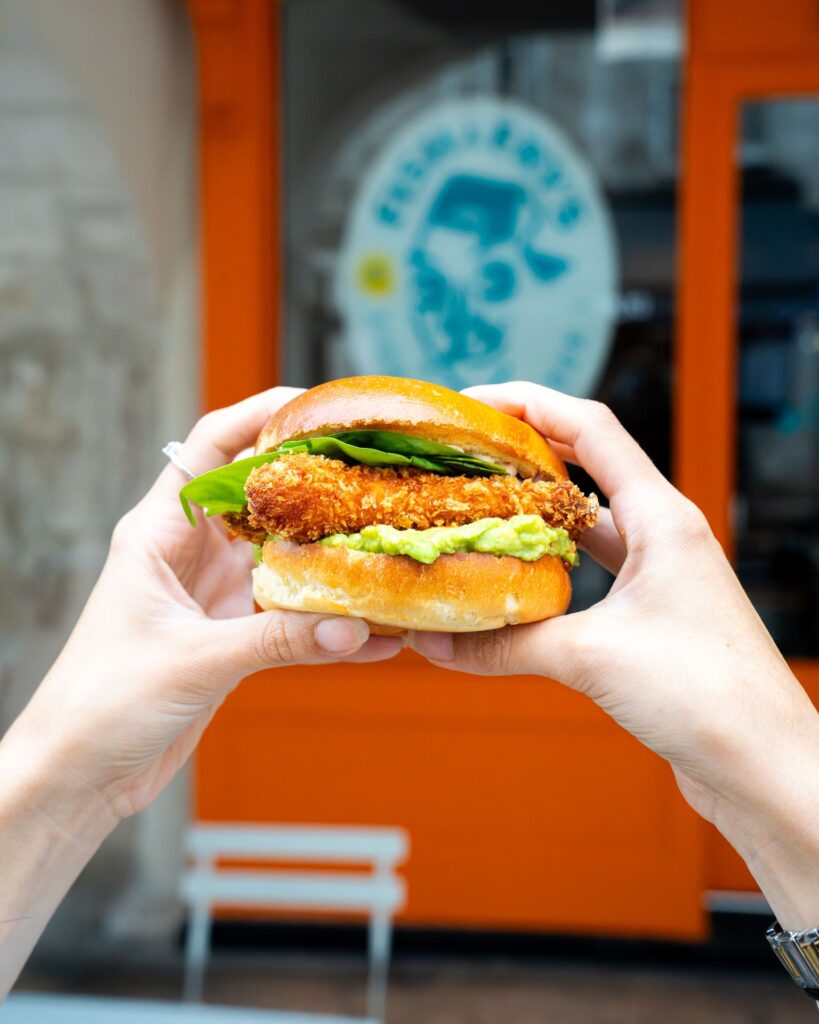
A small operation with Romaric prepping and cooking every dish himself while his brother runs front of house, Fish & Fry’s still manages to serve 70 covers a day. A team of just two does mean a very small menu but what it lacks in size it makes up for in quality. Alongside fish and chips, diners can choose a Caesar salad made with a homemade sauce and fish on top – an alternative for customers who might not want fries – a panko-coated black tiger prawn burger made with three tiger prawns and served with guacamole, and a homemade sundae finished with Cadbury Flakes imported from Britain.
Having worked in fine dining restaurants across Europe, Romaric says hospitality matters just as much as the food. “I’ve worked in some really high-end restaurants and I wanted to bring that guest experience here. From the welcome through to the meal, we think about every part of the visit. I want people to leave happy because they’ve enjoyed both the food and the service.”
Like hospitality businesses here in the UK, Fish & Fry’s is also facing rising costs, with everything increasing from ingredients to electricity to rent even in the year Romaric has been in business. “Hospitality is difficult everywhere now,” he says. “That’s why quality is so important. If people decide they want fish and chips, I want them to think of us first.”
After just one year, trade is already improving, with this summer outperforming the last. Romaric believes there is still plenty of room to grow and hopes to recruit another chef, giving him more time to develop the business further and travel for inspiration.
Future growth could also be helped by new direct flights between Birmingham, Manchester and La Rochelle, bringing more British visitors to the city. “I’m looking forward to welcoming them,” he says. “We do get lots of British people already and they love how I do fish and chips.”
While unmistakably inspired by Britain, Romaric’s fish and chips isn’t intended to be a replica, instead, it reflects his own experiences and techniques. “I just wanted to take one product and make it as good as I possibly could. That’s always been the goal.”