The seafood industry is well placed to benefit from the growing “protein boom”, says the Norwegian Seafood Council (NSC), but only if it better aligns its natural nutritional strengths with evolving consumer expectations.
It points to research showing that 20% of UK consumers now follow a high-protein diet, while a further 62% actively prioritise protein in their everyday eating habits.

And unlike previous health trends that focused on eliminating certain nutrients, it says protein carries a positive association with strength, longevity and overall wellbeing. Yet despite offering complete protein alongside key nutrients such as omega-3, vitamin D and B12, seafood remains underleveraged compared to other categories. While sports nutrition, dairy and protein bars have achieved double-digit growth, processed seafood has grown at a more modest 3%.
According to NSC UK, the way in which seafood is brought to market, and the narrative around it are not being fully maximised. NSC UK country director Bjørn-Erik Stabell explains: “Seafood has a very strong protein story, but it isn’t always being told in a way that resonates with today’s consumer.
“Success in the protein category is increasingly driven by convenience, clarity and accessibility. That means formats that fit modern lifestyles, and clear messaging that makes nutritional benefits immediately obvious.”
Convenience is a critical factor. Research shows that 78% of consumers are drawn to meals featuring visibly healthy ingredients such as seafood[4]. Added to this, approximately 7% of British consumers are now using GLP-1 weight loss medication5 and consequently are changing their diets to focus on low-fat, protein and nutrient-dense meals. Yet despite these lifestyle shifts the category remains underrepresented in ready-to-eat and portable formats – areas where demand is growing fastest.
At the same time, changing eating habits are creating new opportunities. Snacking is now a dominant behaviour, with 88% of consumers snacking daily and younger generations leading the shift towards high-frequency, high-protein eating occasions.
NSC UK believes that unlocking growth will depend on aligning with these behaviours – particularly through the development of ready-to-eat, snackable and on-the-go products and dishes that position seafood alongside other protein-rich options.
It believes clearer labelling will also play a central role. Strong, clear front-of-pack protein messaging, in particular, is seen as essential in helping consumers quickly recognise seafood as a high-protein choice and would allow them to compare it more directly with competing categories.
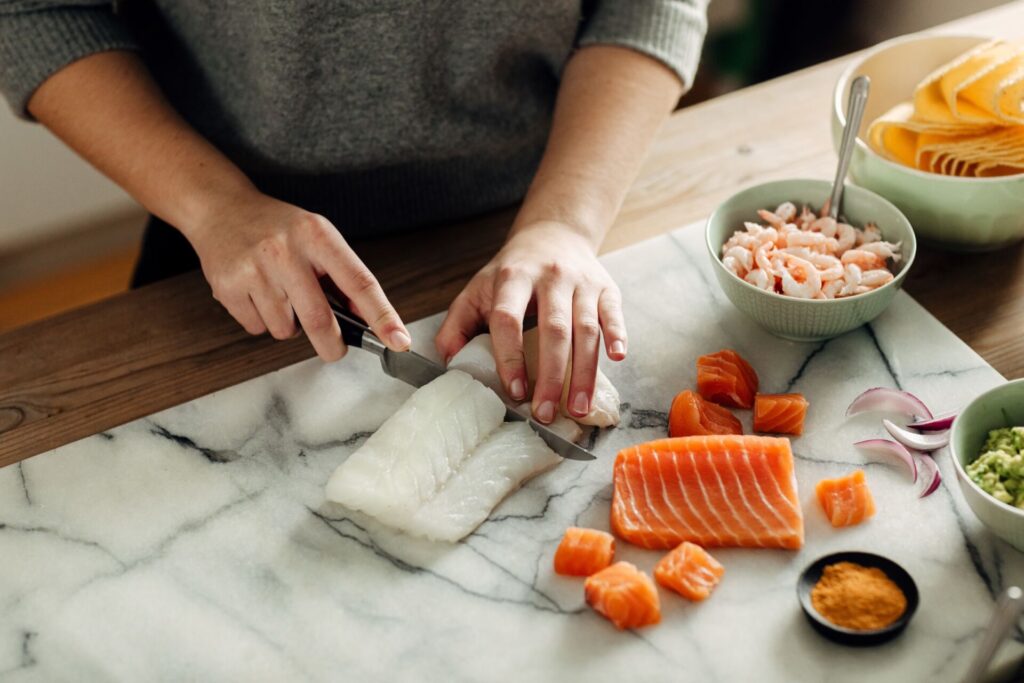
Norwegian seafood offers a strong foundation for this repositioning. As a natural, whole food source of protein that is low in fat, it aligns closely with evolving consumer expectations. Norwegian cod, both farmed and wild, is one of the leanest protein options available, is rich in vitamins A, D and B12, selenium, antioxidants and omega-3, with a single portion covering daily omega-3 requirements. Norwegian haddock also provides high-quality protein as well as iodine, vitamin B12, potassium and selenium.

Alongside its health credentials, sustainability remains a cornerstone of the Norwegian seafood proposition – something which is attractive to many consumers. The Norwegian fisheries model is grounded in science-based quotas and long-term ecological stewardship, with a strong focus on maintaining ecosystem health. Aligned with global sustainability goals, it provides assurance to buyers and industry stakeholders that Norwegian seafood is a responsible and future-facing choice.
Bjørn-Erik added: “There is a clear and significant opportunity to reposition seafood within the protein landscape, but it requires a more deliberate approach. That means making protein content more visible, and ensuring products are designed for the way people eat today – not just for the traditional three daypart meal occasions.”
Recent Posts
- World Cup lifts pubs but restaurant sales dip in flat June for hospitality


- Takeaways and restaurants excluded from business rates cut

- Two chippies win one-to-one support from Frymax
- Bellingham and Rogers mural gives Birmingham chip shop a 30% boost to trade

- Fast food footfall falls as chicken continues to gain ground