
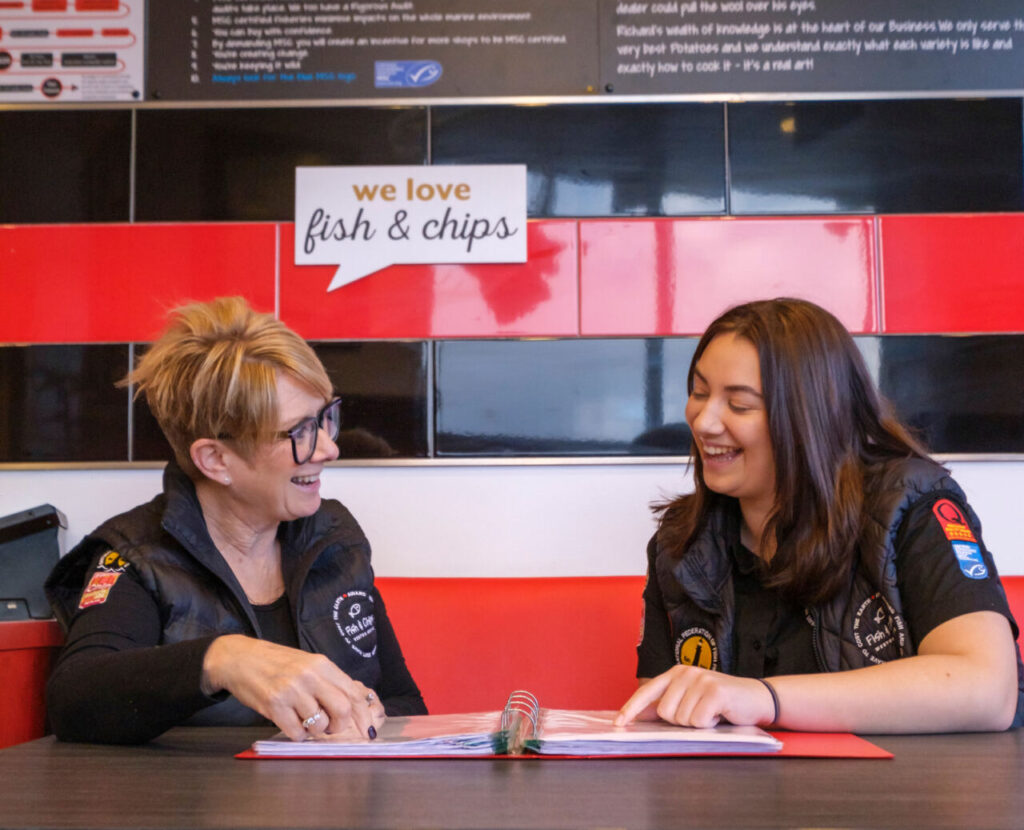
Having taken on numerous young people through her takeaway and, more recently, supporting four apprentices, Josette Foster, owner of Fish & Chips @ Weston Grove in Upton, Cheshire, talks about the value young people bring to the industry
You employ a team of 12, many of them young people. Where does your passion for supporting youngsters come from?

I’ve always worked with young people. Before taking over the shop, I spent 25 years in education and became assistant principal of a large FE college in Manchester. Before that, I worked in hospitality, so I’ve seen both sides – education and industry. I’ve always had a real passion for training young people, and now I bring that into my own business. I’m also part of Skills England’s expert network, helping to develop new apprenticeship standards, so I can feed back what’s actually relevant for our industry.
Why do you think it’s so valuable to employ young people?
For many of them, it’s their first job, so it can have a huge impact on their future. Of course, they learn practical, transferable skills, but it’s also about things like teamwork, timekeeping and communication. Many young people, especially those who went through school during Covid, missed out on face-to-face interaction. This kind of environment helps rebuild that confidence. I know not all of them will stay with us long term, but that’s not the point. They gain life experience, and when they apply for university or other roles, they can talk about working under pressure, using initiative and being part of a team.
Doesn’t it concern you that you invest time in them knowing they may leave?
Not at all. Some do go on to university or other things, but what’s lovely is that many come back during the holidays and remain part of our extended “family”. One former employee joined the Royal Navy and even carried the Queen’s coffin – she still keeps in touch and says how much her experience here helped her.
You’ve put four young people through apprenticeships. What made you decide to go down that route?

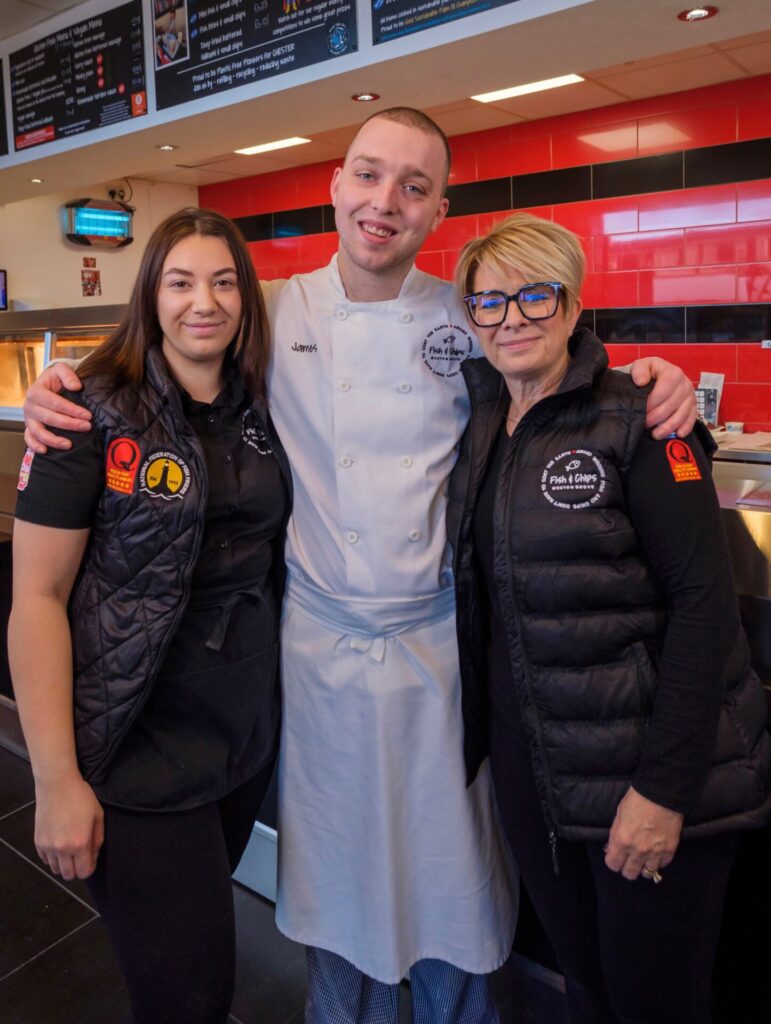
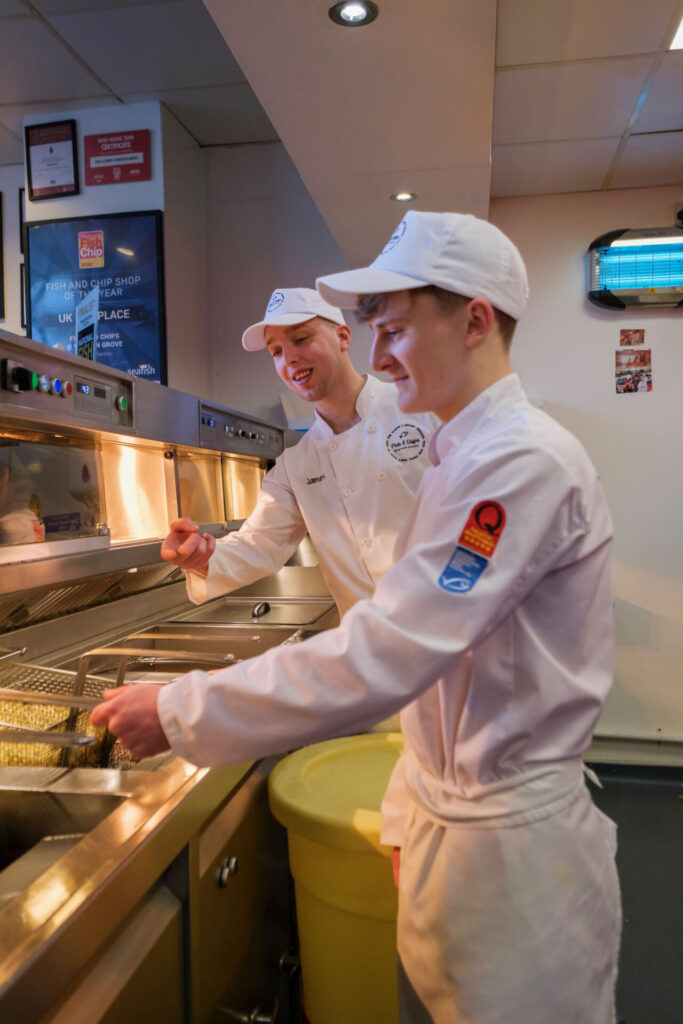
I’m a big believer in apprenticeships. They provide a clear career path with a recognised qualification equivalent to staying on at school, including gaining a maths qualification. Our first apprentice, James Ellams, came to us straight from school at 16 and started serving, but we wanted to give him something more, goals to work towards and a sense of pride in his profession.
How do you support apprentices through their training?
We work with HIT Training, and they’ve been excellent. I stay closely involved, meeting with their trainer, understanding what they’re working on, and then reinforcing that learning in the workplace. For example, if they’re studying HACCP, I will show them HACCP in the workplace, making it easier for them to understand and put into practice.
Does it involve a lot of your time?
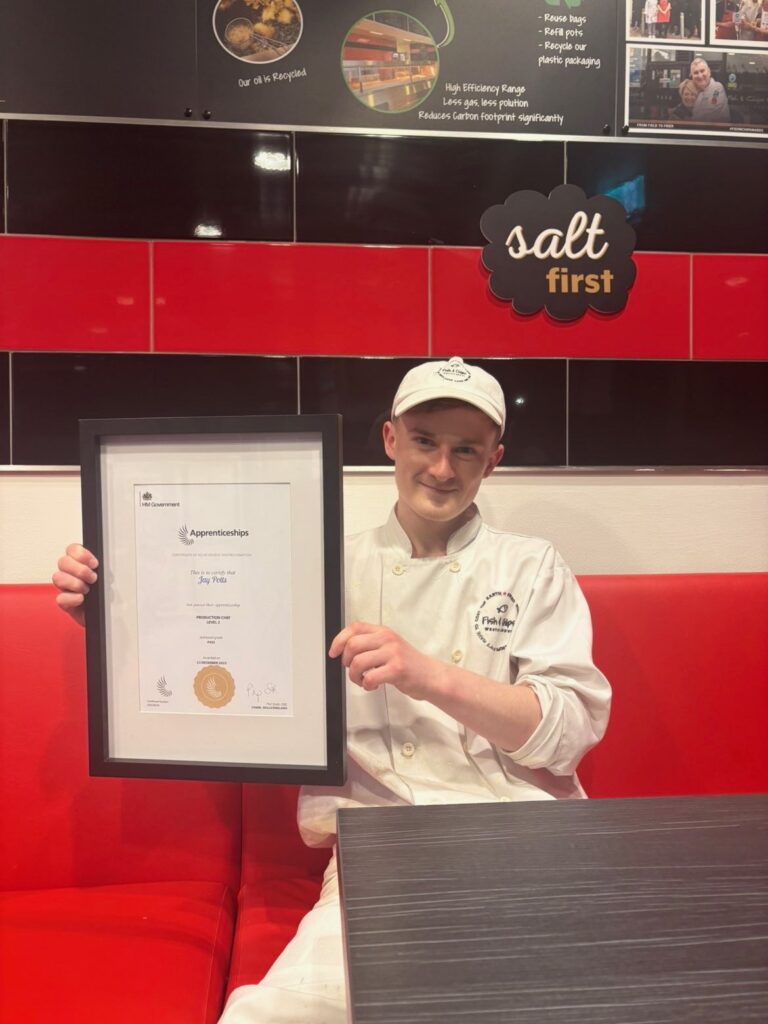
It does, but now some of our former apprentices, like James and Joëlle, help mentor the newer ones. We’ve had members of the team completed Level 2 and Level 3 apprentices, while Joëlle has achieved Level 4. We also make sure apprentices have dedicated study time – about 25% off-the-job training – and we’re strict about that and build it into their rota because their well-being matters. We even provide laptops so they can complete their coursework properly.
What impact has this investment had on your business?
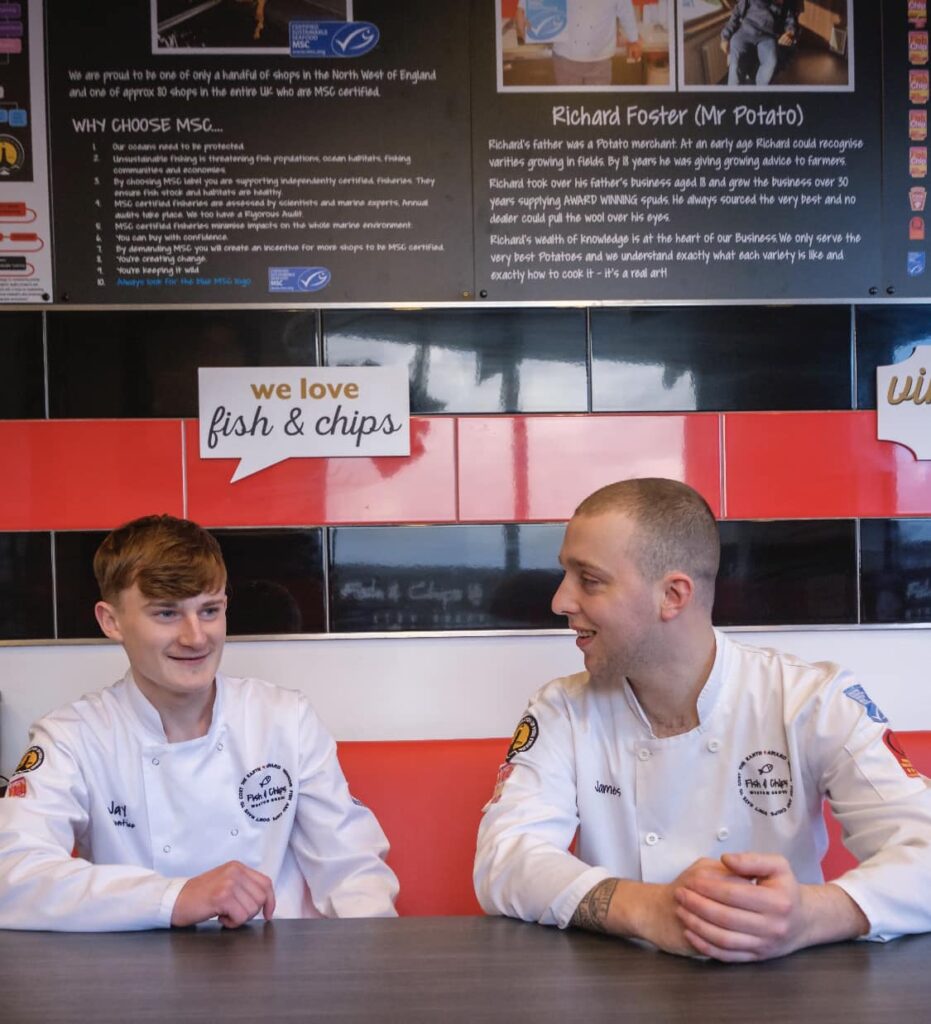
It’s been hugely positive. Apprentices bring enthusiasm and fresh ideas. They take ownership, whether it’s setting up systems or leading on training like allergens for new staff. They become more productive and more loyal, which creates a culture where others want to follow in their footsteps. It’s almost contagious and once one person starts an apprenticeship, others ask if they can do it too. From a long-term perspective, it’s also about succession. James, for example, has come up through the ranks, won the Drywite Young Fish Frier award, and now mentors others and he’s won awards outside of fish and chips, such as The Caterer’s Acorn Award. He also arranges talks to other youngsters about getting into hospitality, which is amazing to see.
What would you say to other shop owners considering apprenticeships?
I’d definitely encourage it. There is funding available to help, but that shouldn’t be the main reason. It should be about genuinely supporting a young person and giving them a future. Some businesses see apprentices as cheap labour, but that’s the wrong approach and they miss out on so much. I reinvest any funding back into the young people.
Also, don’t rush into it. I like to see how someone performs in the job first before offering an apprenticeship. They need to be ready for both the work and the study. If they’re 16, I involve their parents, and the training provider will also assess them.
Do young people bring something different compared to more experienced staff?
Absolutely – fresh eyes, fresh energy and a different perspective. That’s incredibly valuable in any business. I know some people are put off taking on youngsters because the pay gap isn’t that big now between an 18 year old and someone 21 or over who may have more experience, but the government has recently announced £3,000 grants for taking on 18-24 year olds who have been on Universal Credit and looking for work for six months. Again, it’s not the sole reason, but it helps tackle rising youth employment and gives youngsters those valuable first jobs.
You also offer work experience, why is that important?
Schools are often desperate for placement opportunities for 14 and 15 year olds, and many businesses won’t take students of that age, but with a full risk assessment with the school, we do. It’s another way to introduce young people to the industry and give them a chance to learn. They will work with James setting up for lunchtime, we’ll show them how all the delivery orders come in, teach them about hygiene – there’s a lot they can do.
How important is it for hospitality to offer these opportunities to youngsters?
It’s vital. Historically, hospitality hasn’t always been seen as a strong career path, but that’s changing. Apprenticeships help show that it is a real profession with progression and transferable skills. But you do have to put the work in as an employer to train them to high standards and, if they are not working at the required level, you must support them fully to improve. If you invest properly, they’ll love the industry, stay longer, and contribute meaningfully to your business. And ultimately, it’s about promoting how fantastic hospitality can be. If you do it well, young people will want to be part of it and that benefits everyone.
Recent Posts
- World Cup lifts pubs but restaurant sales dip in flat June for hospitality


- Takeaways and restaurants excluded from business rates cut

- Two chippies win one-to-one support from Frymax

- Bellingham and Rogers mural gives Birmingham chip shop a 30% boost to trade

- Fast food footfall falls as chicken continues to gain ground