
Rising fish prices and changing customer expectations are prompting many fish and chip operators to look again at the most important piece of equipment in the shop, the frying range
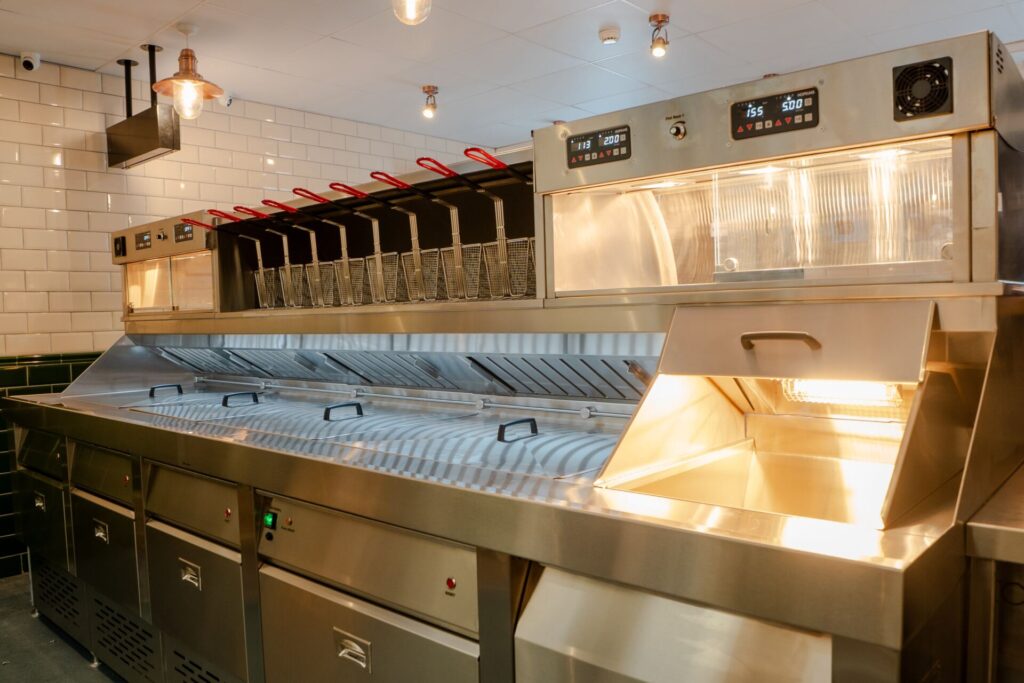
Traditionally viewed as the means to fry fish and chips, modern ranges are increasingly being specified and used as multi-purpose cooklines that allow operators to broaden their menus without expanding the footprint of their kitchens.
With the cost of cod and haddock continuing to increase, the ability to generate sales from other products has almost become a necessity for many shops. Burgers, chicken, grilled fish and loaded fries are now appearing on more menus alongside the traditional offering, often cooked in the range through integrated grills, induction hobs or additional pans.
Suppliers say they are seeing a clear shift in how operators view their ranges, with Nikki Williams, sales director at KFE, supplier of Kiremko frying ranges, believing the trend is largely about flexibility.
“At a time when prices are hard and margins are hard, your frying range can diversify your menu, which gives you more flexibility, which brings more people in,” he says.
An all-round daily menu is one idea he recommends, explaining: “If you’ve got a grill built into your range and you’re prepping your potatoes in the morning, why not do a breakfast bap and a coffee offer? You’ve got staff in and the range is heating up and getting ready for action, so why not make it work all day long rather than only for a certain amount of hours?”
From a staffing perspective, keeping cooking equipment in one place also improves efficiency. “Rather than having your grill behind you or in a different section of the kitchen, having everything in one line means you can pay one skilled member of staff who can look after everything, rather than having to move around. It improves efficiency and should improve staffing.”
Growing diversity

Manufacturers say the growing diversity of menus is influencing how ranges are designed and specified. Ferhat Akkaya, director of range manufacturer Hopkins, says many operators are rethinking their setups when investing in new equipment.
“Shops are definitely reevaluating their menu,” he says. “For example, we’ve had a lot of conversations with customers saying they want an extra pan for frying chicken, so they’re broadening their menus that way.”
Built-in filtration systems are also becoming a common request so as to keep oil cleaner and save money, says Ferhat, as well as gluten free pans with dedicated filtration systems and hot boxes. “It feels like the customers are trying to cater for more of a broader menu,” he adds.
Because ranges are typically bespoke pieces of equipment, operators are taking time to plan layouts that will support longterm growth. “Customers are taking more time thinking about operationally what’s going to work and whether the layout’s right, especially when they’re looking at a new range, they want to get it right from the outset,” adds Ferhat.
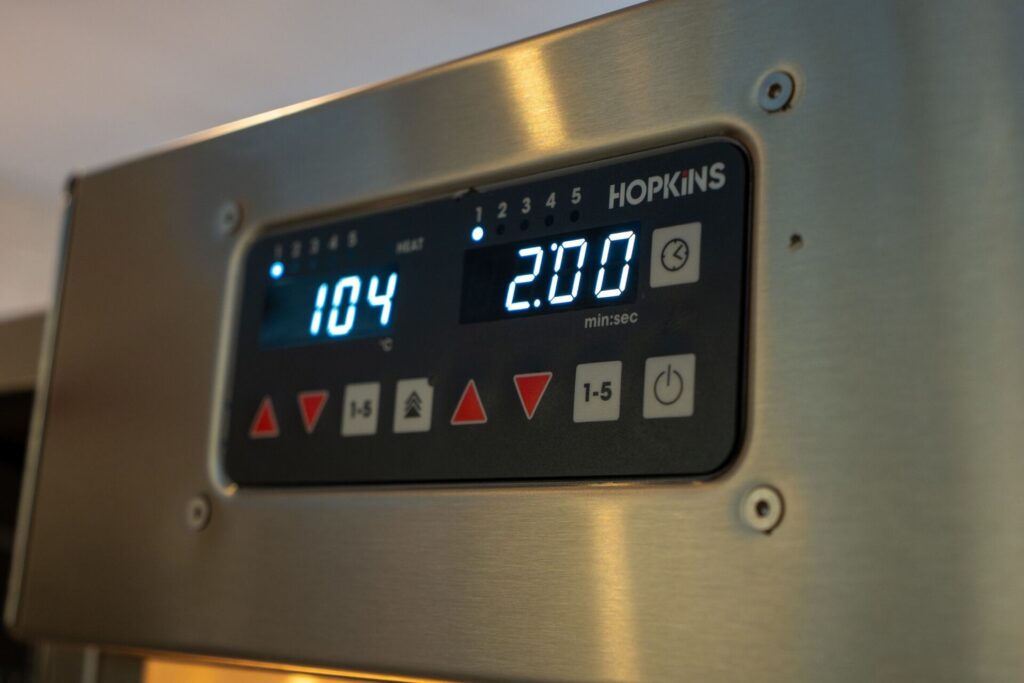
Range design is also evolving to support busier trading patterns and higher throughput. Hopkins, for example, has increased the kilowatt loadings on its pans to improve recovery times as well as introduced new control systems designed to give operators more information about performance. The company’s new controller system includes eye-level displays that allow friers to monitor cabinet timers and pan readings more easily.
Not every operator is investing in a completely new range, however, with Ferhat saying many enquiries relate to modifying existing setups to increase capacity. “We are still seeing enquiries for ‘I need an extra pan, I can’t quite afford a new range’,” he says. Simple adaptations can make a difference to workflow, including removable pan dividers that allow different orders to be separated within the same pan.
Burgers boosting sales
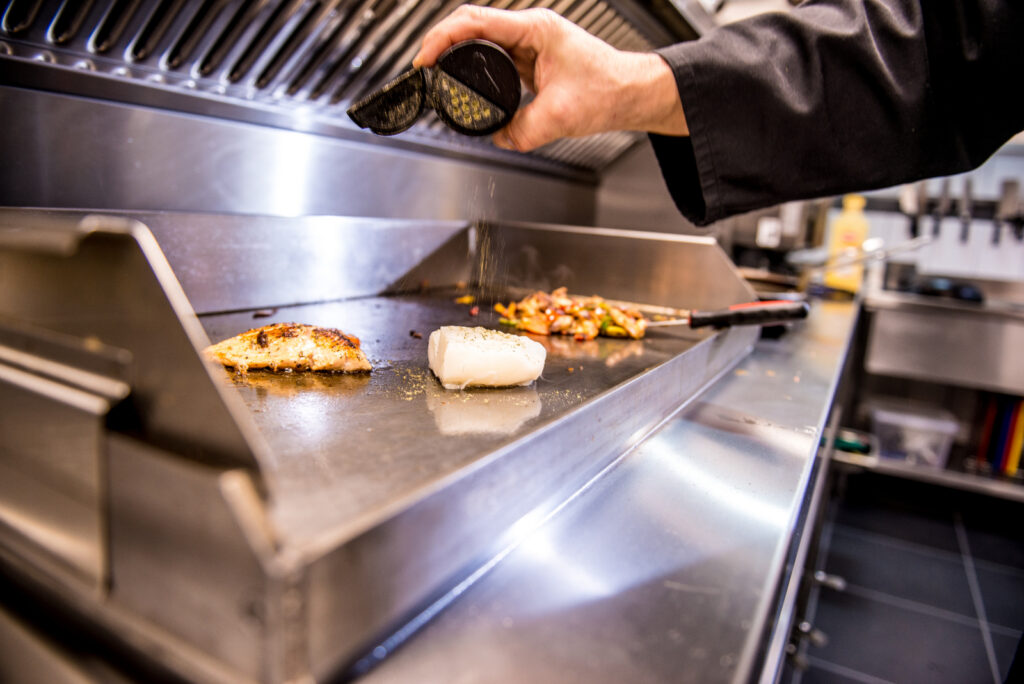
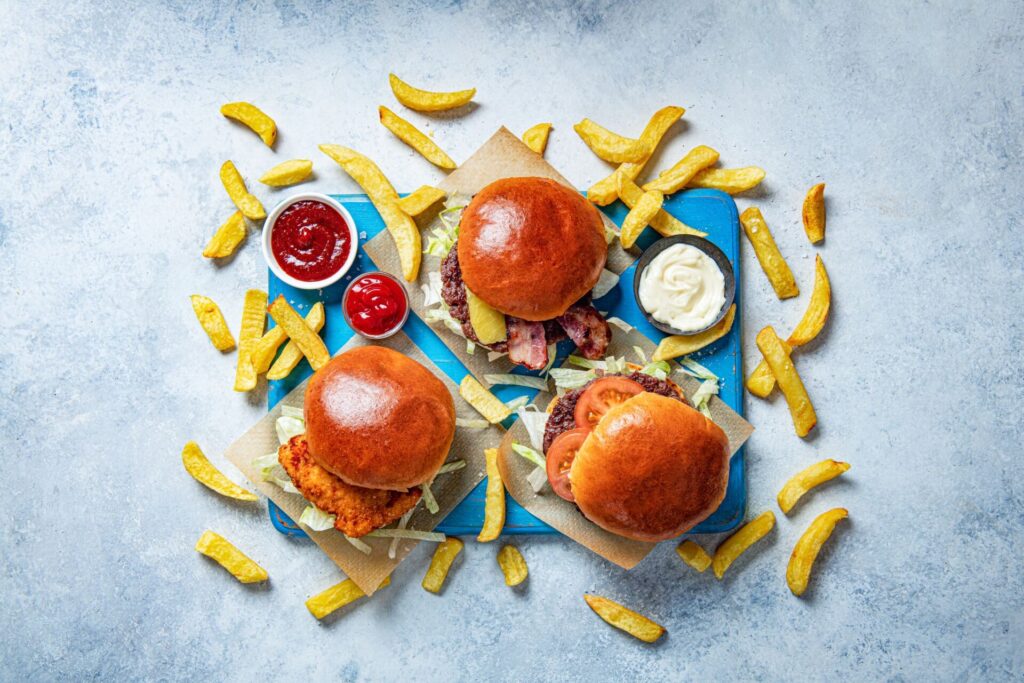
For some operators, integrating grills into their frying ranges has had a direct impact on sales. Kelly Barnes, owner of Krispies Fish & Chips in Devon, has incorporated Adieu grills in the ranges at her shops in Exmouth and Exeter. “For us our burger sales have doubled,” she says. “We’re using a local butcher’s burger and I do think that having the capacity on the frying range has allowed us to do that.”
Previously, burgers were cooked on a separate contact grill in the kitchen, but moving the cooking process to the frying range simplified operations, with Kelly adding: “Before we were cooking burgers out the back. Now it’s all in one line on our frying and it’s so much easier to manage,” she says.
Across the business, burger sales now reach around 400 per week, more in summer. Kelly believes the ability to expand menus will become increasingly important as fish prices remain volatile. “Operators need to look at what their frying range can do for them now, especially with cod being the way it is,” she says. “I’ve been having conversations with people in the industry who are even asking whether cod will be on the menu in six months’ time.”
The grill is also enabling further menu development, particularly around premium loaded fries. “We’re talking about getting a nice bit of steak and frying it, chopping it up and putting that on top,” she says. “That’s the route we’ve got to go down, and we can do that on the grill on the range.”
At Redcloak Fish Bar in Stonehaven, owner Jamie Russo introduced breaded, boneless chicken nuggets and fillets cooked directly in the frying range. The menu has since expanded to include crispy chicken loaded chips and popcorn chicken. He comments: “These have all started just as specials but they’ve been so highly sought after that we’ve just kept them on the menu as a permanent thing.”
The new products have helped bring in new customers, with Jamie adding: “Fish and chips is still our number one seller, but chicken is definitely catching up to it, and it is definitely younger people buying it. At lunchtime, we started with a menu of deals that included chicken, sausages and fish, and very quickly we we’re doing 40-50 portions of chicken and chips for the school kids, so we ended up just taking the fish option off. And the best thing about all these chicken items is they offer better margins than your fish.”
Cooking the products within the main range keeps operations streamlined. “It’s so convenient because it’s still all just on the same line,” Jamie says. “You don’t need an extra person through the back with a pressure cooker or a separate fryer. Don’t get me wrong, chicken kills your oil a bit quicker, so you need to adopt some better oil management techniques, but being able to fry it in the range just helps to streamline everything. It doesn’t disrupt your service by doing it.”
Integrated equipment
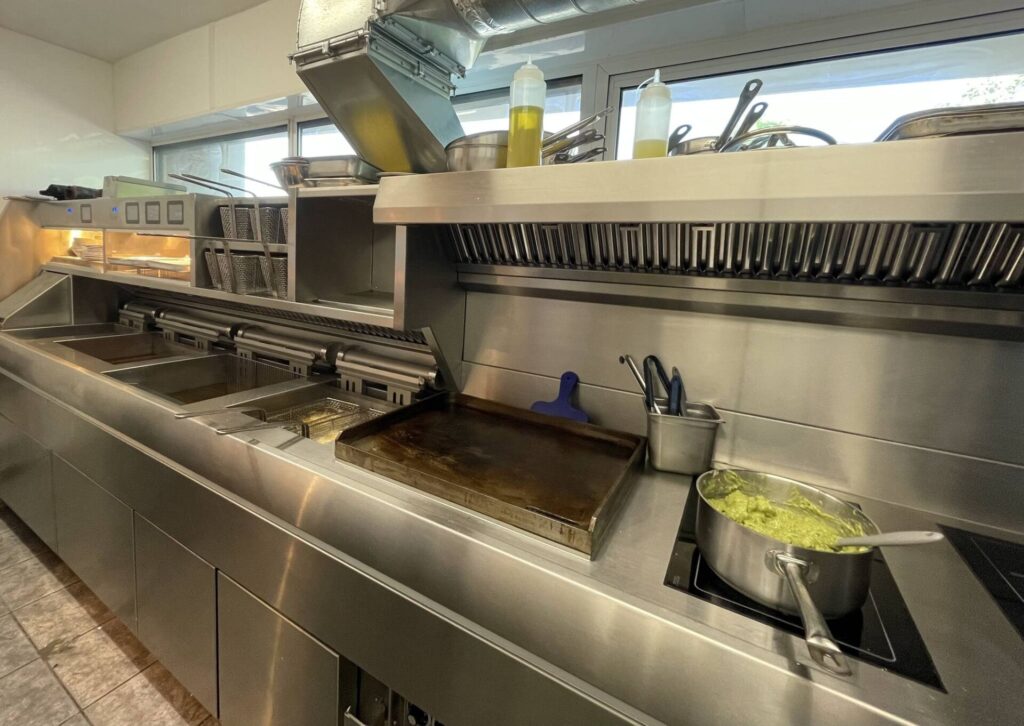
In larger restaurant-style operations, integrated equipment within frying ranges is supporting more ambitious menus. At Noahs in Bristol, the 54-seat restaurant has an induction hob and grill built into its range, allowing the kitchen to prepare a variety of dishes alongside fish and chips.
“We’re making a lot in-house – stocks and fishcakes –as well as opening mussels, roasting shellfish and doing a bit of pan-fried fish as well, so it just gives us a lot more versatility having the additional equipment built-in,” explains owner Dan Rosser.
The induction hob allows quick preparation of stocks and sauces while maintaining energy efficiency. “Water is up to the boil within minutes,” Dan says. “They’re super efficient. You literally have them on and off as you want them.”
Keeping these elements integrated into the range allows the kitchen to operate as a single production line. “We’re fish and chip based but we do a lot of grilled fish and shellfish as well, so we run it as a production line,” he explains. “The grill runs in line with the fish and chip range so you can tie both elements of the menu together.”
For Dan, the approach helps attract different types of customers.“Our bread and butter, and the reason why we’re doing so well, is because of the fish and chips, but I do think by giving people the option to try some amazing shellfish or grilled fish elevates us into a different market. By adding that equipment into the range, it’s allowed us to hit a really wide market.”
The benefits of integrating equipment into the frying range extend beyond menu development. For many operators, it also improves workflow and makes better use of limited space.
Paul Goodgame, managing director of The Chesterford Group which operates the Fish’n’Chick’n and Churchills brands, says his business integrates Synergy grills into frying ranges when upgrading to give the distinct BBQ flavour profile they want across their BBQ items. “The benefit of having it built into the range rather than having a standalone piece of equipment is workflow,” he says. “Having everything within a couple of steps enables multitasking.”
At Trenchers in Whitby, North Yorkshire, where the 210-seater restaurant operates separate pans for gluten free frying and vegetable oil, manager Andrew Wilkinson highlights similar advantages, particularly where space is limited. “Being able to work from one piece of equipment really helps us against having little standalone fryers,” he says.
“Operationally, the workflow means you need less staff,” Andrew explains. “You’re condensing things into one work area. It makes the job easier and increases output because you’re not doing as many miles in a day.”
At Trenchers’ restaurant in Spanish City, Whitley Bay, the range includes an induction hob, grill and microwave, enabling it to extend the menu beyond fried fish and chips, for example, pan-fried fish and shellfish. “Fish and chips is our bread and butter, but customers’ tastes are changing and people want to try something different now and again, so having that choice is important,” adds Andrew.
Evolution
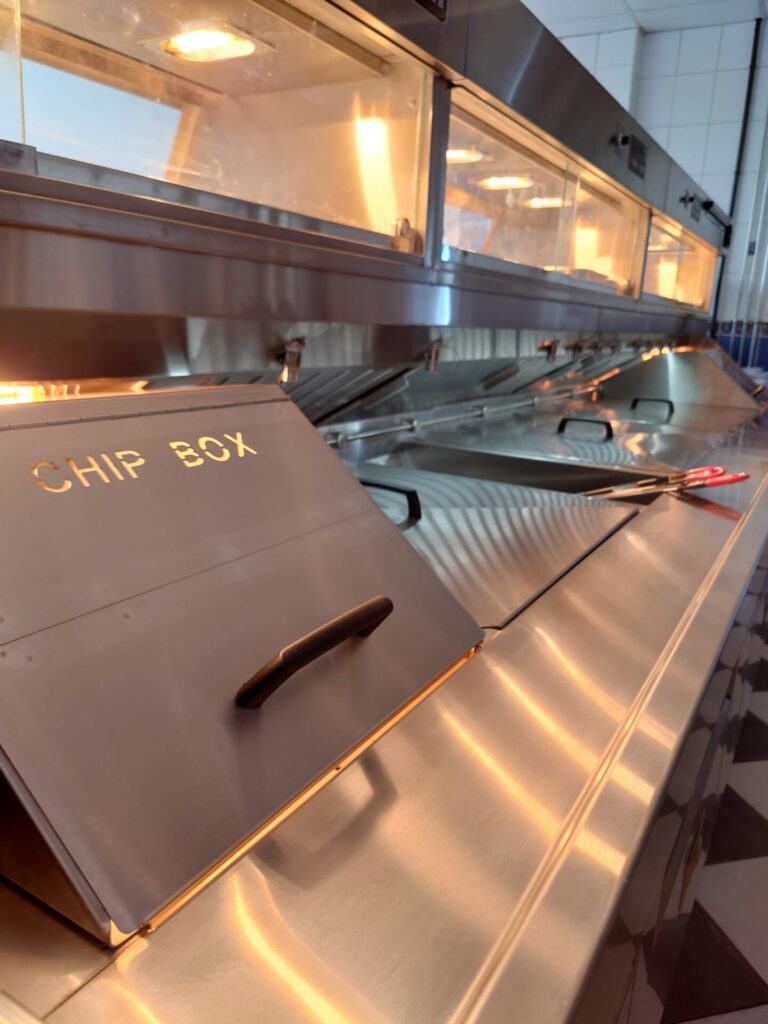
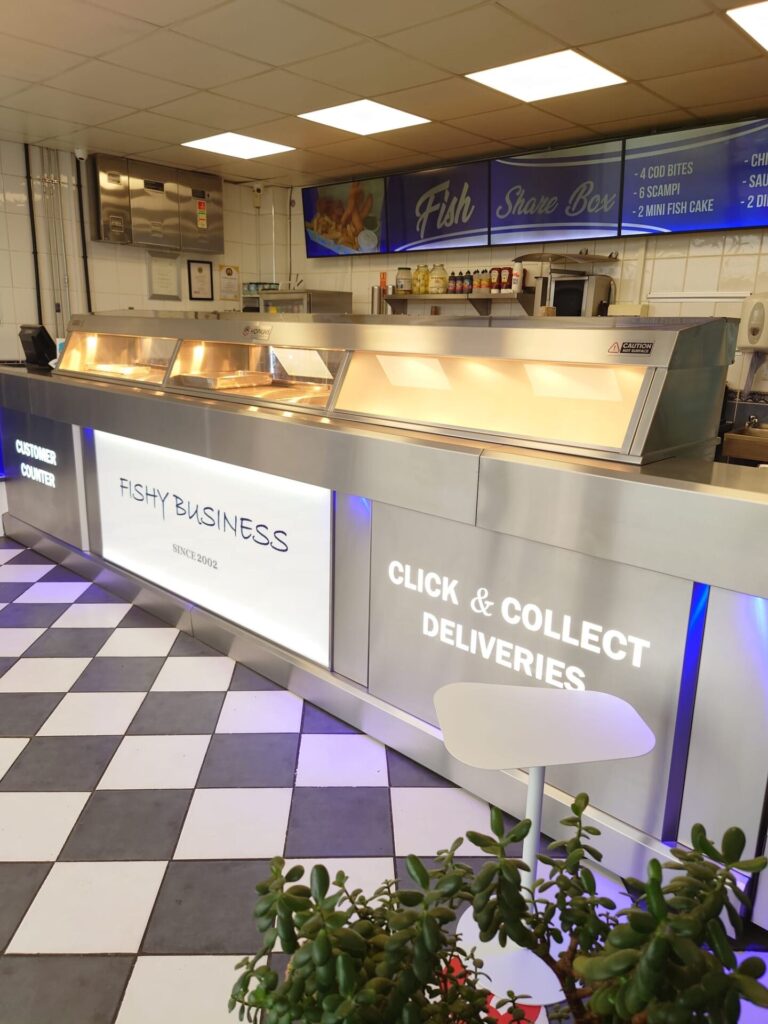
Ultimately, many operators say the role of the frying range has evolved alongside their businesses. Phil Melon of Fishy Business in Peterborough, Cambridgeshire, recently replaced the 35 year old range he inherited in 2002 with a new three pan counter range. A key addition was a second chip box to better handle growing delivery and click-and-collect orders alongside walk-ins. Previously, with only one chip box, staff often created a bottleneck during busy periods, but installing one at each end of the range now keeps service flowing.
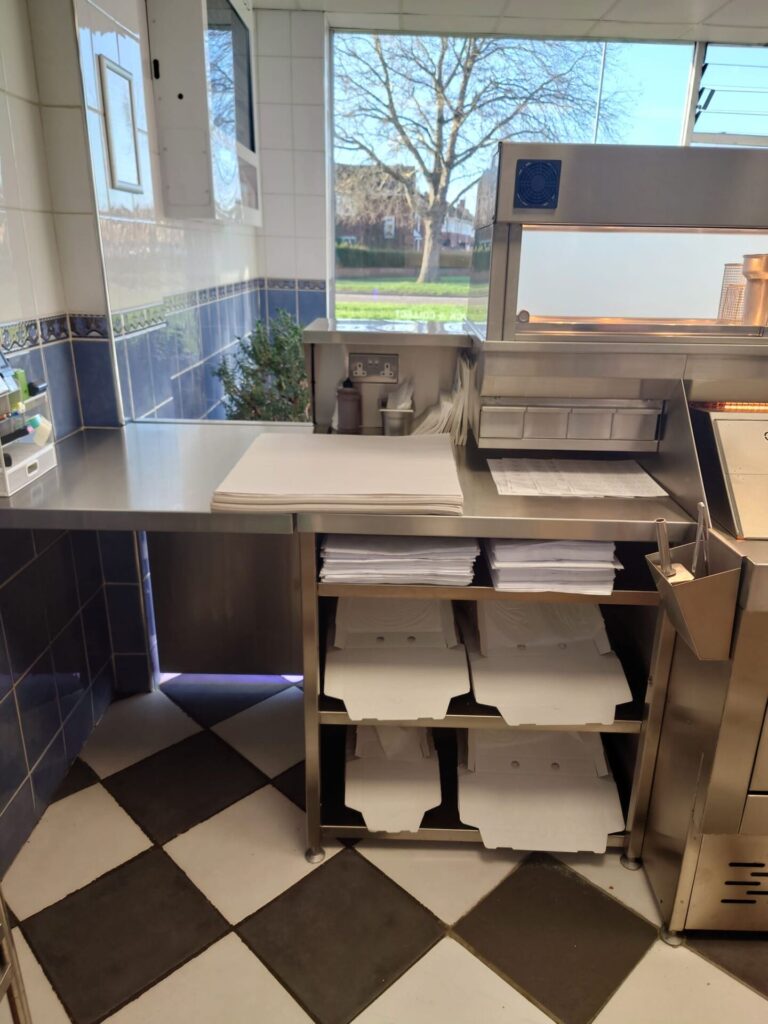
Packaging has also changed, with orders now served in corrugated boxes. During the refit, Phil added shelving sized specifically to store the boxes neatly under the counter. Likewise, he had a utensil holder designed that hangs on the side of the range so utensils no longer clutter up the counter top. Though small details, Phil says it highlights how modern ranges need to adapt to changing operations, adding: “Times have changed and your range needs to reflect that,” he adds.
For an increasing number of fish and chip shops, the range is no longer just about frying fish. It has become the centre of a broader cooking operation, capable of producing everything from burgers and chicken to grilled seafood and premium sides and, as costs rise and customer tastes continue to evolve, that versatility is proving more valuable than ever.
Recent Posts
- World Cup lifts pubs but restaurant sales dip in flat June for hospitality


- Takeaways and restaurants excluded from business rates cut

- Two chippies win one-to-one support from Frymax
- Bellingham and Rogers mural gives Birmingham chip shop a 30% boost to trade

- Fast food footfall falls as chicken continues to gain ground