
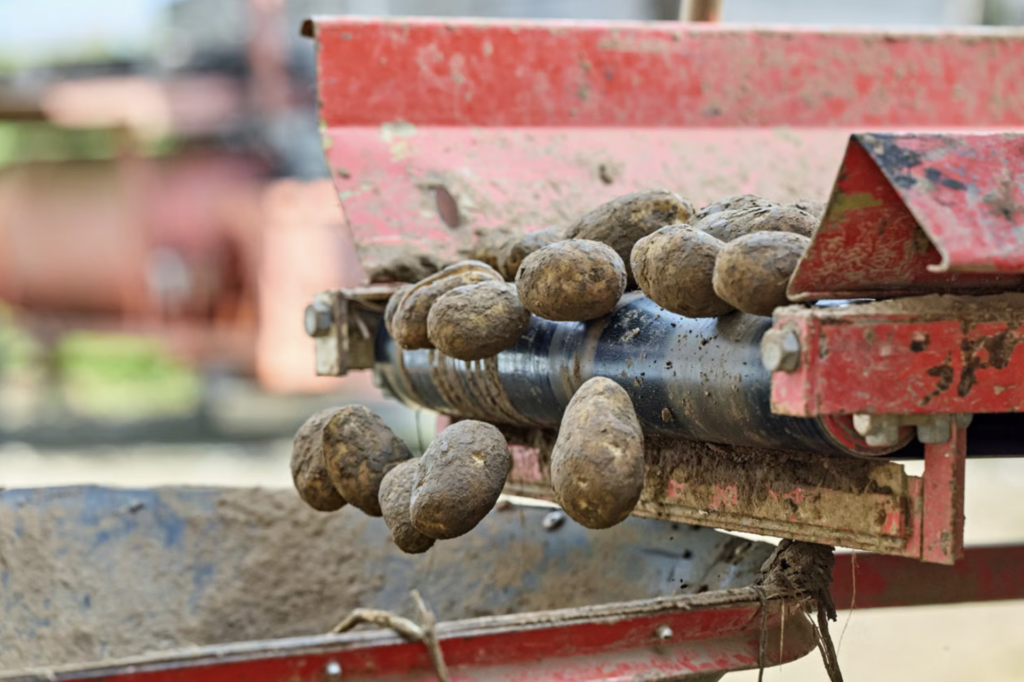
The new season potatoes are delivering a boost in quality, but the dry weather could mean lower yields to come
While fish prices continue to put pressure on margins, potato prices have remained relatively steady this summer, with shops now moving on to the new season crop. The transition, however, has been slightly different to previous years, says Daniel Mead, office manager at Essex-based A Russell Farmers. Supplying around 110-120 tonnes of potatoes each week to shops across Essex, East London and Sussex, he says it has been an unusual year, adding: “Normally nearer the end of the season you’d expect prices to be going upwards as the stock gets lower around the farms. Sometimes they’ve reached £18 a bag but it’s quite common for them to be £13 or £14.
“But this year the farmers had far too much stock, so prices stayed very low. We were seeing around £9 a bag near the end of the season. Normally, shops are desperate to go on to the new crop because they’re getting better potatoes and a price drop. This year, going onto the new crop actually saw a price increase, which made it quite a unique year.”
With a bag of Sagitta selling for around £11, he believes the market should remain relatively stable over the coming months. “I don’t think we’re going to see prices as low as last year because the farmers simply can’t afford it. A lot of them lost money and they won’t sell them that cheaply again. What we don’t want is farmers dropping out of the market because that’s when things get difficult.”
His advice is to focus on quality rather than the lowest price. “Don’t be afraid to pay a little bit extra because it doesn’t cost a lot more to get the best product.”

Welcome improvement
For many shop owners, the arrival of the new crop has brought a welcome improvement after a challenging end to the old season. The Fish Works in Largs, Ayrshire, winner of the Field to Frier Award at this year’s National Fish & Chip Awards, endured several difficult weeks before the new potatoes arrived. Owner Tiffany Irvin said: “Towards the end of last season the potatoes were diabolical. We were having to remove so many eyes, bad bits and bruising, and the yield was really atrocious. Even after cutting them out, there were still bits through the potato you couldn’t remove.
“We knew ourselves we weren’t selling the best product we could, but we didn’t have much option because the new ones hadn’t been harvested yet.”
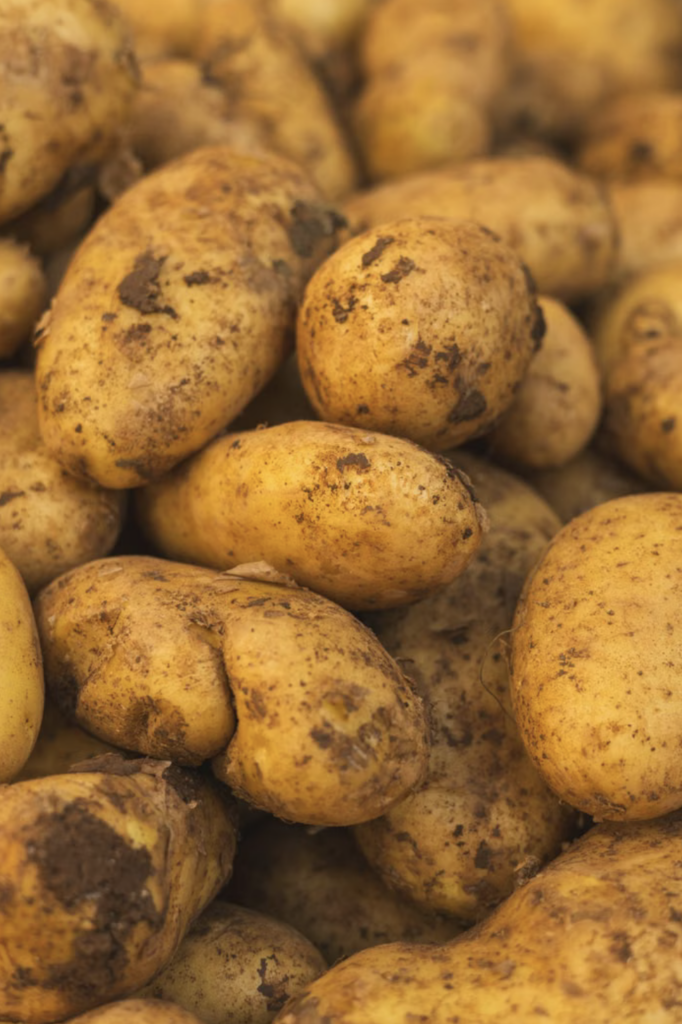
The difference once the new crop arrived was felt immediately, with Tiffany adding: ”It was like a breath of fresh air. They’re fantastic. They literally don’t have a blemish. They’re really creamy, the texture’s brilliant and everything about them is really good.”
Like Daniel, Tiffany believes buying quality potatoes always pays for itself, saying it’s pennies wise and pounds foolish to buy cheaper ones. “By the time you’re rumbling them for longer, cutting out all the bad bits and removing blemishes, your yield’s probably non-existent. You’re saving two or three pounds a bag, but you’re losing it somewhere else.”
She also lives by the ethos that potatoes deserve just as much attention as every other ingredient in the shop. “We probably sell more portions of chips than fish and chips because you’ve got chips on their own, sausage and chips, scampi and chips and loaded chips. If you start with a really good potato, you’ll get better yield, better quality and a better end product.”

Reduce costs
Nigel Hodgson, owner of Hodgson’s Chippy in Lancaster, Lancashire, believes many shops are missing an opportunity to reduce costs because they aren’t aware of the need to adjust their processes for the new crop.
One of the biggest mistakes he sees is operators continuing to use old season frying times. “People aren’t adjusting their timers,” he says. “What I would suggest is get a sample bag, test it in your peeler so you get your maximum yield, then adjust your frying times. We’re probably saving between 45 and 60 seconds per fry with the new crop compared to the old crop.”
He also recommends reduced peeling times, adding: “We’ve gone from maybe three-and-a-half minutes in the peeler down to around 60 seconds. The guys putting them through are only there for a third of the time now.”
Those two tips alone will extend potato yield, help operators serve more customers and save on energy costs, wages and water, he says.
Although paying more for new crop potatoes than the old season’s, Nigel says the premium is worth it. He explains: “We were paying £8.50 for the old crop and they were in the peeler for three minutes. Now we’re paying £10 a bag, they’re in for 60 seconds and we’re getting a much better yield.”
Like many operators, he says the quality of today’s new potatoes is a world away from years gone by. “Years ago we used to apologise for going onto the new crop, but in all fairness the quality now is excellent. There’s no need now because the potato quality is excellent and we’re getting a really good yield because they’re a good size.”

Frying well
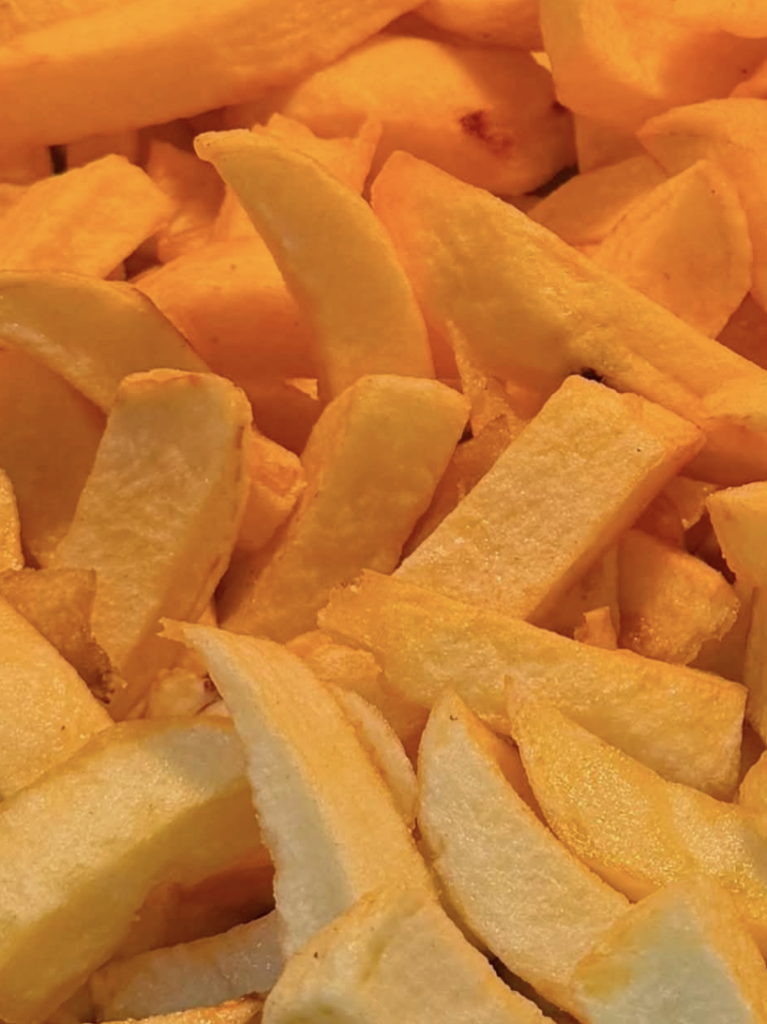
Across the country, merchants say the new crop is frying well, with dry matter improving as the season progresses. Katy Cracknell, head of sales at G Cracknell Potatoes, which supplies around 90-100 tonnes a week across the North East of England, has recently moved from Accord onto Sagitta. She comments: “Sagitta is what works best for the fish and chip shops we supply. Everyone wants a nice light frying chip, and Sagitta provides that with a nice flavour.”
Current prices are around £10.80 per bag, but Katy says the prolonged dry weather is creating uncertainty later in the season. “The quality’s there. We’re picking every day, and the dry matter is good. It’s just going to be the yield because of the warm weather. We’re fortunate that all of our growers irrigate because consistency is really important to us, but a lot of farmers don’t and that will put pressure on yield. On top of that, a few farmers have decided not to grow this year because of the cost of fertiliser, machinery and irrigation.”
While she doesn’t expect a return to the £20 a bag potatoes seen a few years ago, she believes the drought could influence prices later in the season. “I can’t see it going to the highs it was a few years ago, but it is going to affect prices this year if yields are down.”
Mark Graham, MD of Manchester merchant Vic Graham & Sons, is also watching the weather closely. “We’ve just seen a bit of a jump in prices because growers are reluctant to lift at the moment. The crop’s still growing and they’re hoping another week or two will give them more yield, so the market’s very tight because nobody’s lifting.”
He’s currently supplying mainly Accord, with Sagitta beginning to come through, but says size could become an issue. “They’re small, in all fairness. It’s going to be a year where size may be an issue because it’s been so hot and dry, which slows potato plant growth. Once the soil reaches around 22°C, they stop growing altogether.”
Much now depends on rainfall, however, it’s steady rain to soften the ground that farmers and growers will be hoping for and not thunderstorms where the water simply runs off hard ground. What’s more, Mark warns that if lifting starts in hard ground, knocking and bruising is more likely. His advice to operators is to trust their supplier, adding: ”Good potatoes are easy when everything’s straightforward. When conditions become challenging, that’s when you really see the difference a good supplier can make.”
The immediate picture
Although concerns remain over the impact of drought on this year’s yields and next season’s crop, the immediate picture is encouraging with operators reporting shorter peeling times, quicker frying and far better quality than they experienced at the end of the old season. For The Fish Work’s Tiffany, the lesson is a simple one: ”You can just tell when you’ve got a really good potato. You’ll get so much more yield out of it, and the quality you’re putting out is miles better.”
Recent Posts
- JJ Foodservice strengthens fleet with 20 new multi-temperature delivery vehicles


- Papa’s moves south with opening in Kent

- Food businesses urged to choose British eggs following salmonella outbreak

- Drywite Young Fish Frier serves up 9,000 portions of fish and chips in one shift

- Fast food traffic returned to growth in June, led by chicken