
Self-service kiosks can help serve more customers with less pressure during the busiest hours of the week, but what should you consider when purchasing one?
Fast food giants such as McDonald’s, KFC and Burger King have been using self-service kiosks for more than a decade. The technology has become established as a way to speed up ordering, reduce pressure on counter staff, improve order accuracy and increase average transaction values during busy periods. And with labour costs continuing to rise following increases in minimum and national wage rates, many operators are also looking at kiosks to improve efficiency without compromising service standards. As a result, self-service ordering is increasingly being adopted by independent operators, including fish and chip shops.
But the reason they are proving so popular is not just because operators love them, but crucially, customers do too. Research by digital ordering and restaurant management system Vita Mojo found that 64% of customers said they would visit a restaurant more often if kiosks were available. That figure increased to 80% among Millennials and 91% among Gen Z consumers. The report highlighted speed of service as a major factor, noting that many customers are only willing to wait around ten minutes before deciding to dine elsewhere.
The research also found that customers appreciate the privacy and flexibility self-ordering provides. Ordering through a kiosk can make menu customisation easier and reduce the sense of pressure sometimes associated with ordering at the counter. According to Vita Mojo, 61% of consumers spend more when using self-order kiosks due to reduced perceived judgment and easier upselling through digital menus.

Placement
With this in mind, Richard Fennell, founder of SwiftOrder, a supplier of self-service kiosks, believes they are heading the same way online ordering did, adding: “A few years ago, many independent takeaways didn’t offer online ordering. Today, customers simply expect it. We believe self-service kiosks are moving in the same direction and that within the next five years they will become normal in many shops.”
Leaving sufficient space around kiosks for group ordering is another valuable consideration, as SwiftOrder’s Richard explains: “Ordering on a kiosk often becomes a shared experience. We regularly see groups of kids huddled around the screen ordering together, or couples deciding on sides while browsing the menu – and they’re smiling. Unlike ordering on a phone, kiosks become part of the visit. With shorter queues, faster service and a more interactive ordering experience, kiosks can help encourage customers back into the shop instead of automatically reaching for marketplace delivery apps. If visiting the chippy feels quick, easy and enjoyable again then collection becomes far more attractive.”
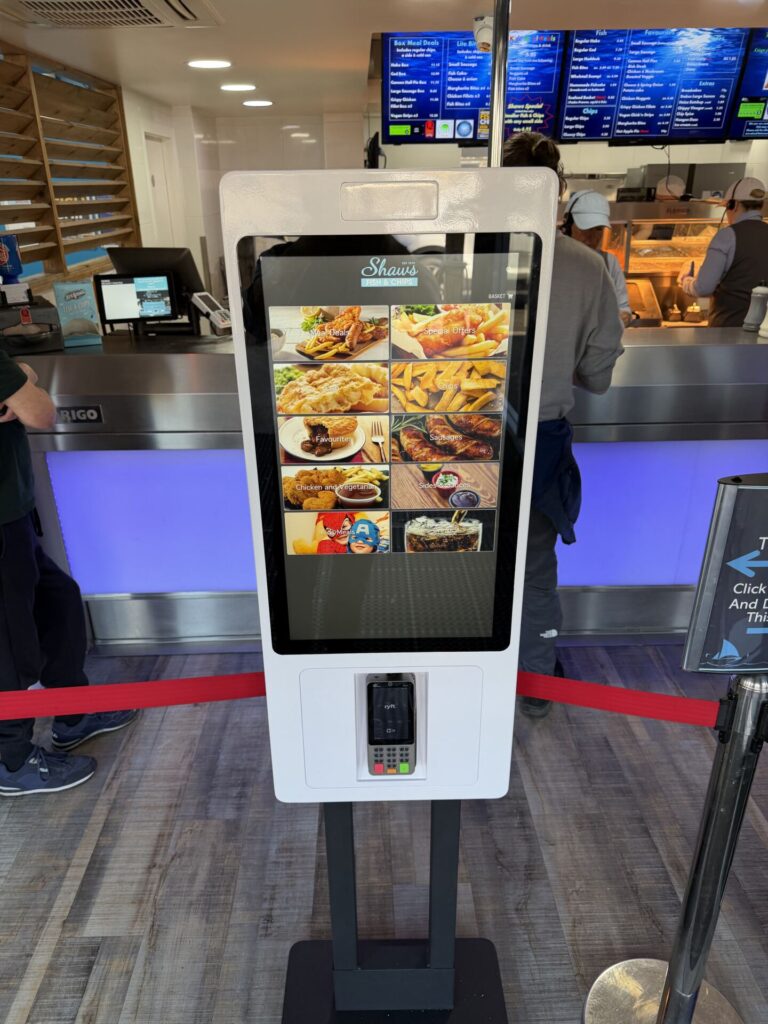
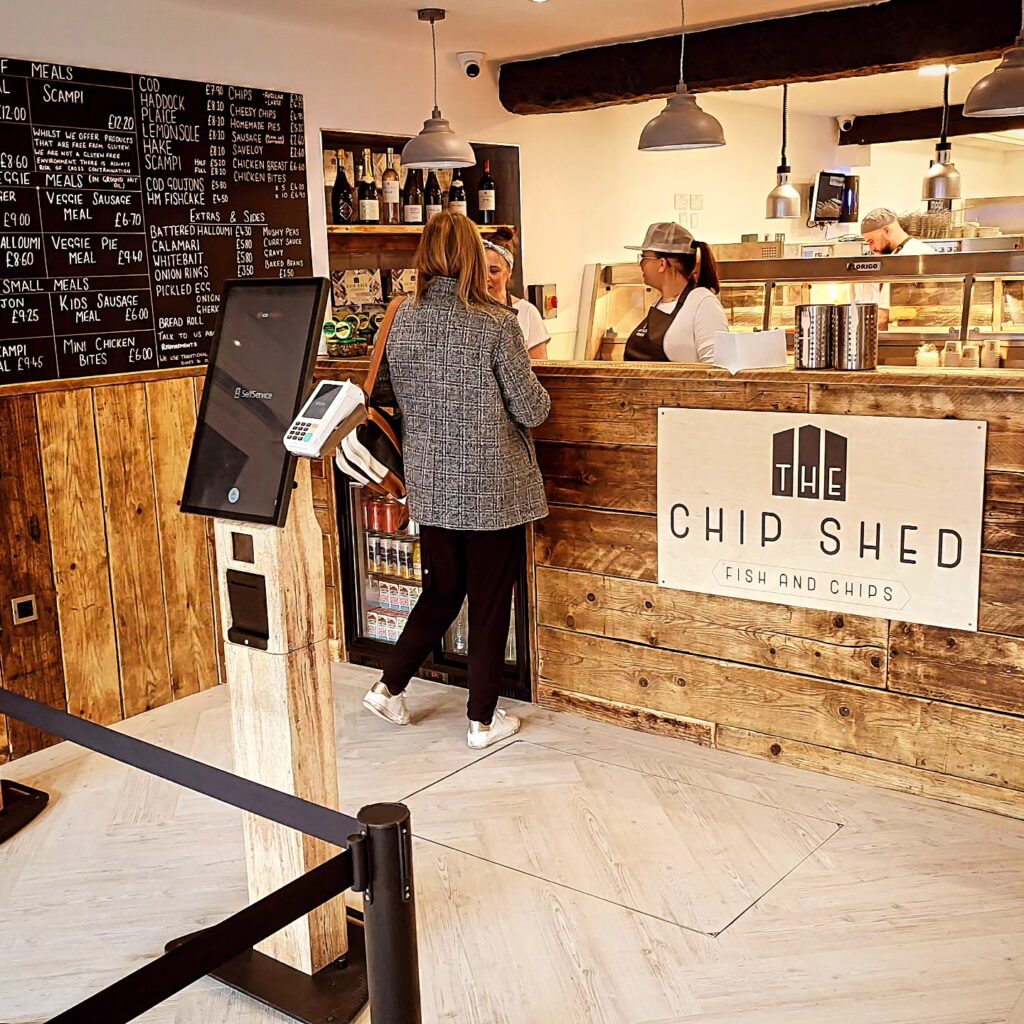
For operators considering investment in kiosks, placement remains one of the most important factors. Poorly positioned units can create bottlenecks near entrances or collection points, while well-planned layouts can improve customer flow and reduce queue congestion. Having said that, you want them to be hard to avoid so customers are encouraged to use them. “There’s a reason why you have to walk through rows of kiosks to get to the counter at McDonald’s,” says Jason Bailey, sales and marketing manager at technology provider PanaEpos. He also recommends recommends a bespoke vinyl wrap so kiosks feels like a natural part of the restaurant/takeaway branding, and carefully consider the customer journey, adding: “What does the order process look like to the customer? Do you need a collection point screen as well?”
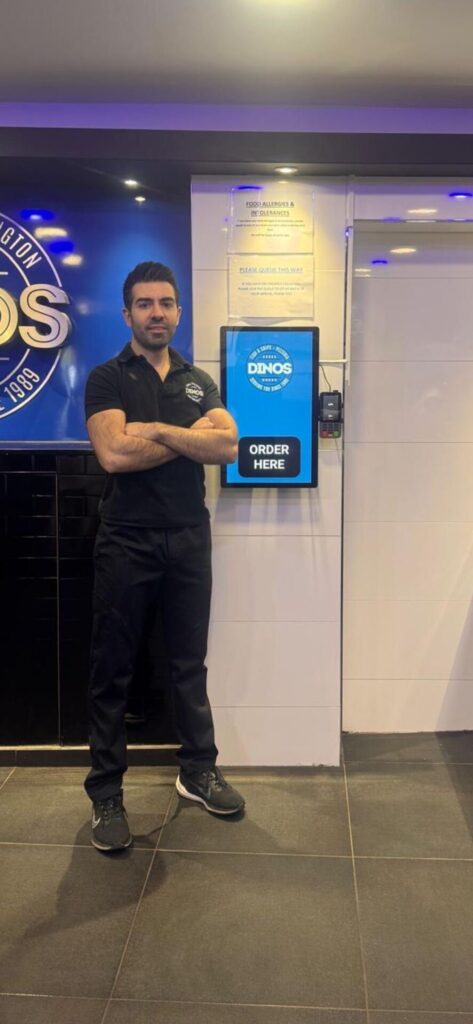
If you’re limited on floor space don’t think that rules out self-service ordering as operators can choose from handheld units, wall-mounted terminals and compact floor-standing kiosks depending on the available layout. Barry Dickman, owner of BD Signs & BDigital, which works with technology companies on shopfitting and branding projects, says: “We have worked with third-party suppliers to mount these systems to walls where there is a high customer flow but a small accessible area. We have also added screens to the back of these systems where they are situated in front of glass windows so the back can be shown at street level to promote consumers to enter.”
Ease of use
Ease of use is another important consideration as customers are less likely to adopt kiosk ordering if systems are slow, confusing or difficult to navigate. Clear menu structures, simple customisation options and straightforward add-on prompts can help increase spend while improving the customer experience. And while it can be tempting to use kiosks during peak periods only, keeping them operational throughout the day will encourage customers over time to use them. Ease of use applies as much to the operator as it does to the customer as this can dramatically reduce maintenance issues. For example, SwitfOrder chooses not to use customer-side receipt printers, helping avoid printer jams and paper issues during busy periods.
High quality product photography is also important in driving sales, with customers often spending more time browsing menus when using kiosks, giving businesses a greater opportunity to promote sides, upgrades and meal deals.
It’s worth bearing in mind too that although kiosks can reduce pressure on front counter teams, staff will still be needed to assist customers, manage collection points, maintain cleanliness and troubleshoot technical problems when required. It’s certainly recommended having a member of staff to guide customers through the process during the first week of install.
Before you reach for your wallet, however, do consider the demographics of the customers who use your takeaway. While younger consumers are generally comfortable with digital ordering, many older customers still prefer face-to-face interaction. That doesn’t mean kiosks are the wrong choice, but a hybrid model that combines self-service kiosks with staffed tills will help cater to all customer preferences.
Recent Posts
- World Cup lifts pubs but restaurant sales dip in flat June for hospitality


- Takeaways and restaurants excluded from business rates cut

- Two chippies win one-to-one support from Frymax
- Bellingham and Rogers mural gives Birmingham chip shop a 30% boost to trade
- Fast food footfall falls as chicken continues to gain ground