
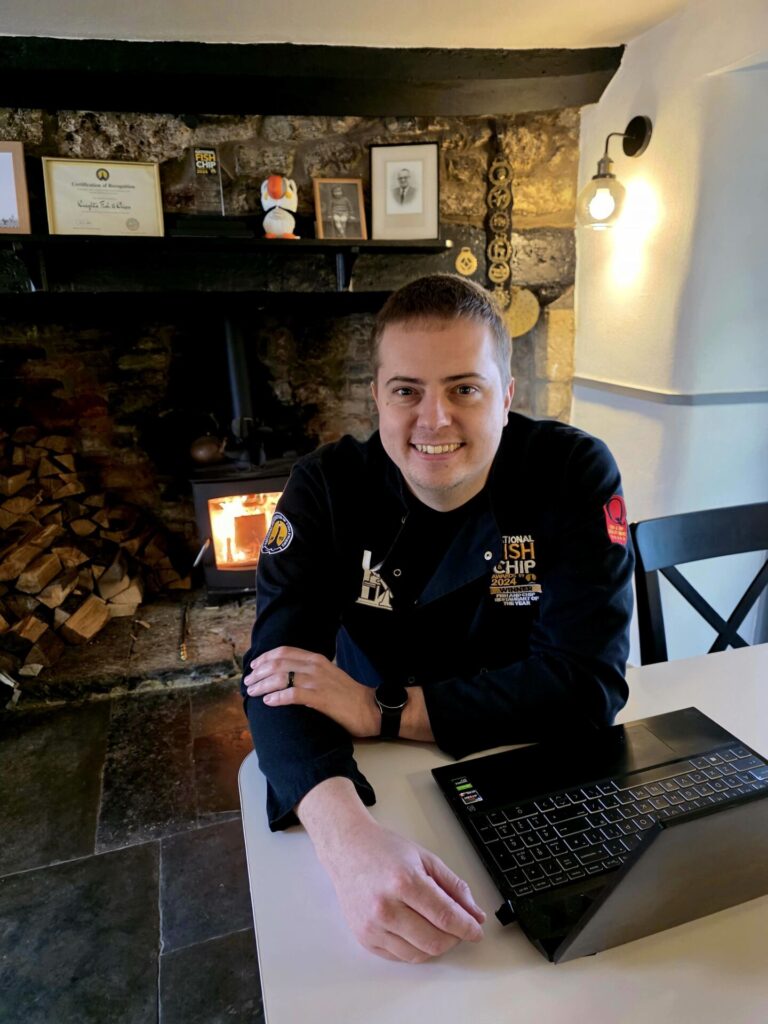
AI is significantly reducing administrative tasks at Knights, but it must be used responsibly to maintain authenticity, says George Morey
We’ve been established for nearly 120 years here in Glastonbury and we’re a very traditional business in many respects, but over the last few years I’ve found myself moving more and more towards AI and technology to protect our margins and make the operation smoother.

It really started after we won Fish & Chip Restaurant of the Year in 2024. Suddenly, the level of demand went up, and with that came a huge amount of admin. We’re an 80-cover restaurant, and up until then we were completely pen and paper when it came to bookings. Every day, before service, we’d sit down for an hour just to draw up a table plan by hand. We were spending about seven hours a week managing bookings and it just wasn’t sustainable.
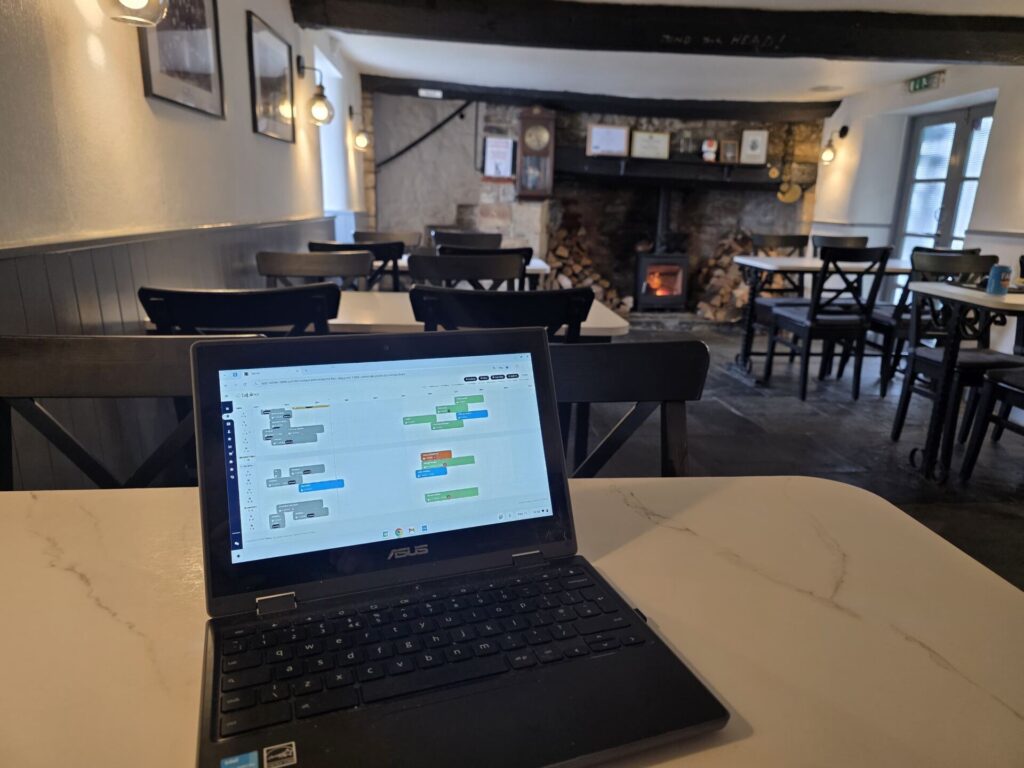
So we invested in an online booking system called Tableo. Customers now book directly through our website, which links to their widget. The system looks at our availability and allocates tables according to the rules we’ve set. We can limit the flow of covers per hour or half hour, set deposits for larger groups, and close off certain rooms or tables. It’s very comprehensive and largely hands off. Occasionally we’ll swap a table around if we know a regular prefers a certain spot, but that’s it.
The booking system also links with our click and collect and delivery services, and it’s allowed us to build a database of over 5,000 customer contacts. That’s invaluable. We can keep people informed about changes, promotions or just stay in touch. For a business like ours, which still has that traditional feel in-house, these systems are built to handle volume without the admin burden.
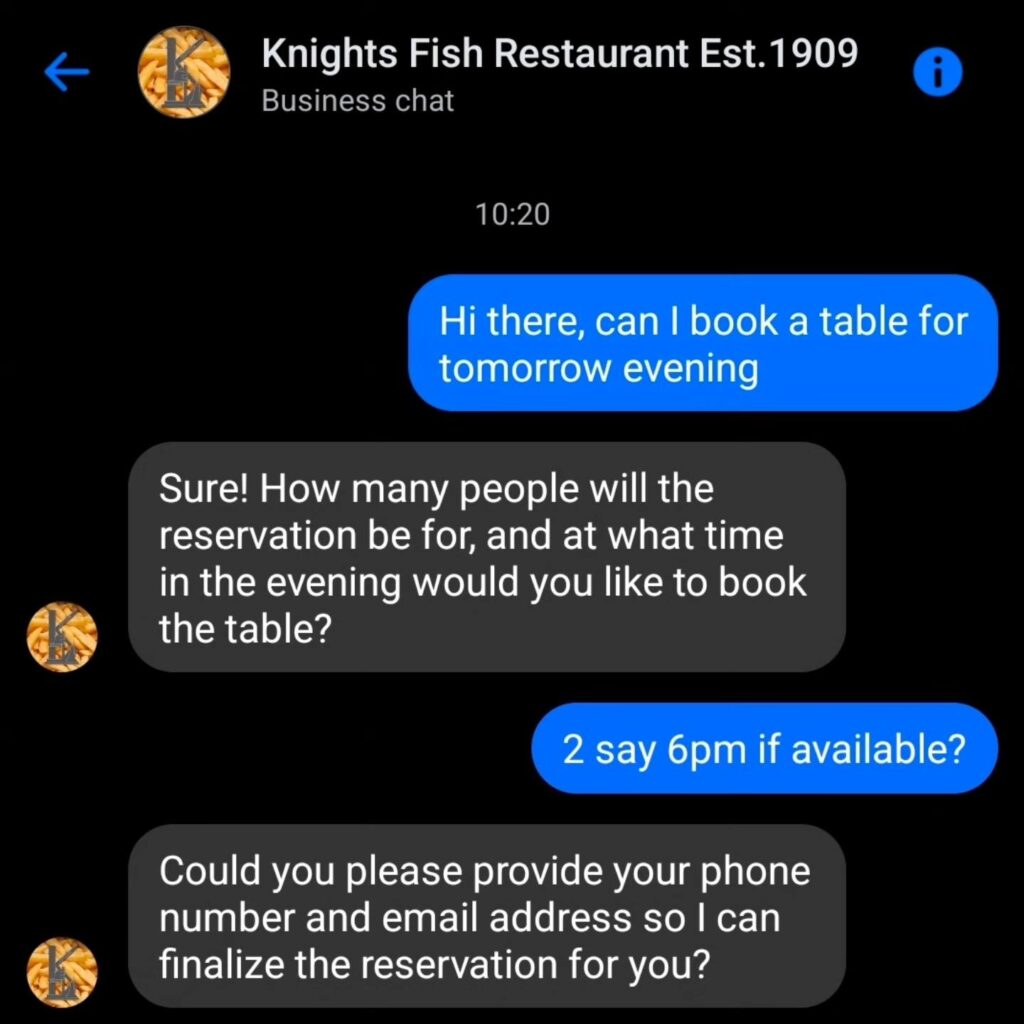

I’m always looking for things that save time and, in turn, save money so when Tableo approached me about trialling an AI chatbot for Messenger, I was interested straight away because I’m already a heavy AI user. We use Google One, and the AI tools that come with that have made replying to e-mails much quicker. The reporting side is just as important. I don’t have the time to sit and digest all our sales data, so I’ll feed it into AI and ask it what I should be concerned about, what’s dipping or what’s performing well.
The Messenger chatbot now handles bookings as well as general enquiries. If someone asks, “Do you do deliveries?” it will direct them straight to our website. If they ask, “Are you fully booked”, it can suggest alternative times if the answer is yes. It’s another system that saves time, labour and organisation. For a small business, that’s crucial. Yes, there’s a monthly fee, but compared to staffing costs it’s no comparison.
It also manages communication like confirmation emails, text reminders and follow-ups asking for feedback. We’re approaching 1,000 reviews now, almost all five-star, and that’s incredibly valuable. The system tracks how often customers book and gathers data that helps us understand our audience better.

Coming from an old business with practices handed down through generations, I find myself constantly questioning everything now. Is there a smarter way to do this? A more efficient way? AI can help with something as simple as drafting a social media post or replying to an email. But you have to give it cues. Without input and oversight, it becomes what I call “AI slop” – recycled, generic content that isn’t authentic.
For me, AI isn’t a replacement, it’s a beneficiary to back you up. It supports what we do and frees up time so we can focus on what we’ve done well for almost 120 years: serving great food and looking after our customers.
Recent Posts
- World Cup lifts pubs but restaurant sales dip in flat June for hospitality


- Takeaways and restaurants excluded from business rates cut

- Two chippies win one-to-one support from Frymax
- Bellingham and Rogers mural gives Birmingham chip shop a 30% boost to trade

- Fast food footfall falls as chicken continues to gain ground