As fish prices continue to rise, operators are balancing higher costs with efforts to introduce and educate consumers about alternative species
This time last year, fish and chip shops were still trying to get their heads around frozen-at-sea cod reaching £250 a case while facing the prospect it could climb towards £300. Now it has passed that mark, sitting at around £325 and looking likely to go further still. Cod and haddock are not only more expensive and difficult to source, but they are also becoming increasingly challenging for shops to build a sustainable business around.
Operators are being forced to make tough decisions. Some have raised prices to levels they once thought impossible, while others say they have reached their limit and simply cannot go any higher. Many are experimenting with smaller portions, alternative species such as hake, coley and hoki, or new ways of explaining value to customers who still expect cod and chips to be a low-cost staple.
Supply
At the centre of the issue is supply, as Bobby Joyce, sales and marketing director at fish wholesaler Smales, explains: “The 2026 Barents Sea cod quota is set at the lowest level for 35 years and EU sanctions mean that the Russian vessels that catch half of that quota cannot supply their fish to the market. This has naturally put further pressure on prices as supply simply cannot match demand from the markets globally that want cod.”
The result is a global competition for limited fish, with UK importers forced to pay market rates simply to secure supply. “All importers have to pay the market price to ensure the product comes to the UK rather than elsewhere, but we are doing what we can to keep any further increases to a minimum,” explains Bobby.
Acknowledging the strain this places on the fish and chip sector, he notes that quota holders are also under pressure to make their businesses viable, adding: “There is a realisation from quota holders of the pressure these levels of price are placing on the fish and chip sector, but that has to be balanced against making sure they achieve the best value for their quota so that they can maintain salary levels for the crew who go out to sea to hunt for the fish.”
While there is some cautious optimism for the future – with haddock quotas increased this year and early signs that cod quotas could rise from 2027 – the immediate reality is that cod and haddock prices remain high and operators must adapt.
Premium products
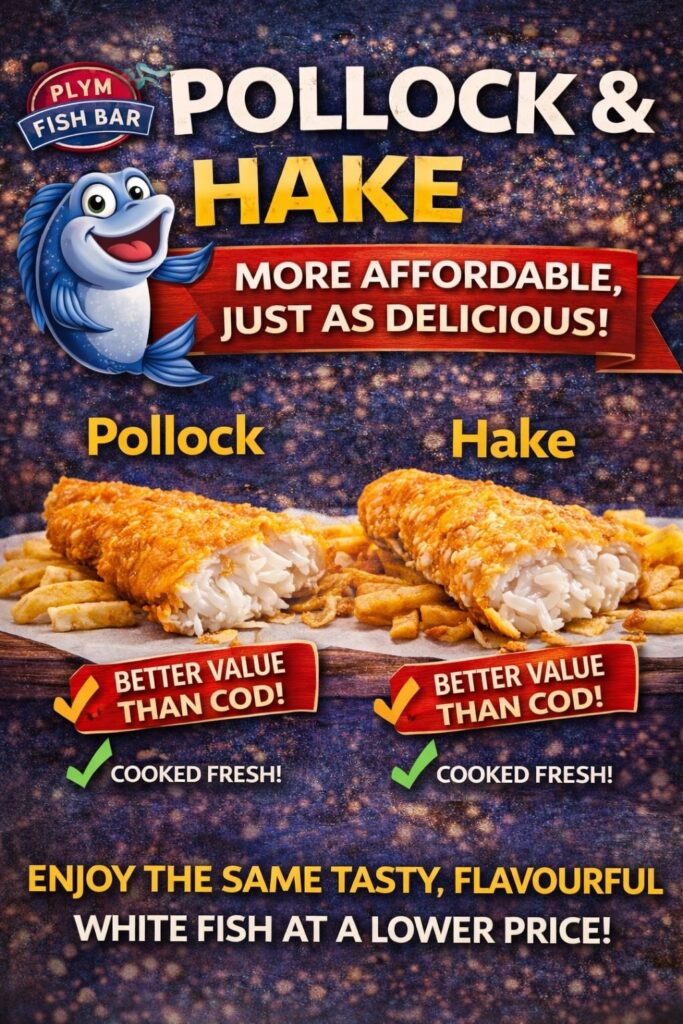

For some shops – and their customers – the decision has been to accept their status as premium products. At Plym Fish Bar in Plympton, Plymouth, manager Phil Marshall says cod has become increasingly difficult to source in the sizes they need, while prices have risen sharply.
“Within nearly two years, it’s gone up by about £100 to £150 a case,” he says. “We used to get 8–10oz cod but now we’re buying 16–32oz fish, because that’s all we can get, and cutting it down ourselves.”
That extra preparation has led to new menu ideas, including cod bites made from offcuts which they now sell for £1.30 each, and smaller portions for children. But Phil is clear that there is a ceiling on what customers will pay.
“To make the money we need to on cod, we’d have to start charging ridiculous prices, and people won’t pay it,” he says. “You can see it in how people order. Where they used to have two cod and two chips, now it’s one cod and one chips to share.”
His response has been to push alternatives like hake and pollock, which now account for around 20–30% of sales and continue to grow week by week. Pollock and hake are priced at £9.50 for a 6–7oz portion, compared with £12.50 for cod and chips.
“We’re not selling it as cheap fish,” he says. “We’re still buying the best hake and pollock we can. It’s about showing people there are other white fish that still give a great fish and chip experience.”

Education
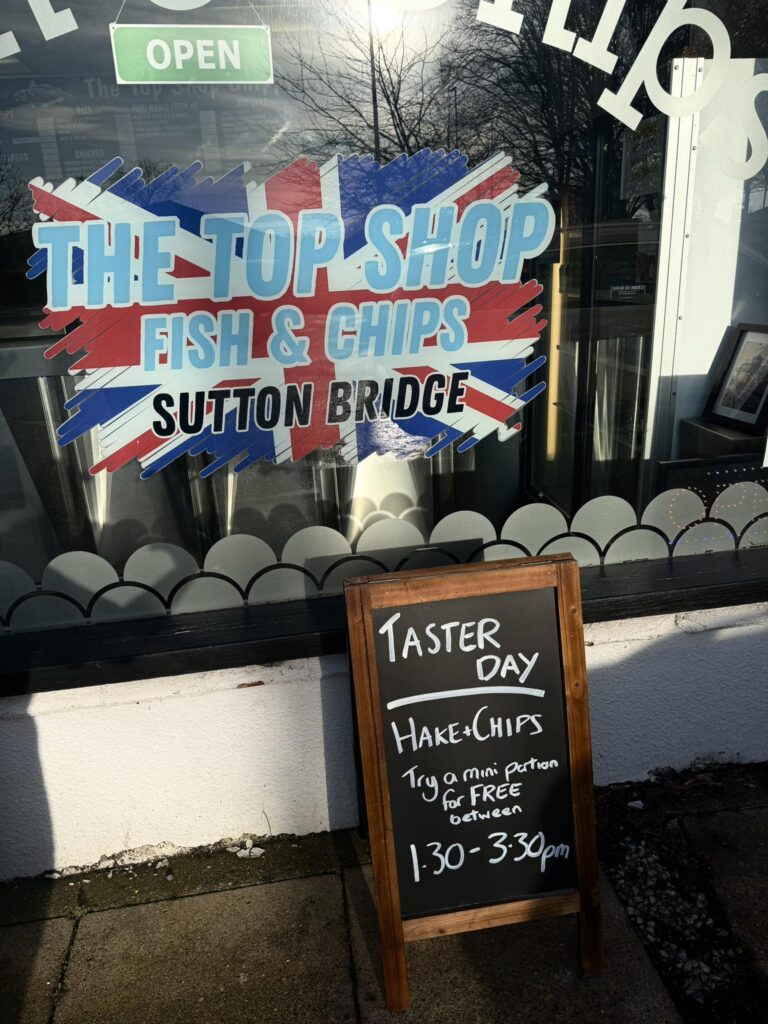
This focus on education is echoed elsewhere. At Top Shop Fish & Chips in Sutton Bridge, Lincolnshire, owner Carlo Cifalbi says cod prices have more than doubled, with boxes that a few years ago cost £140–£160 now exceeding £320.
“In the last 12 months alone, cod has gone up about £1 to £1.50 a fillet,” he says.
Rather than pushing prices higher, Carlo has focused on offering choice. Cod and chips currently sell for £11.50, up from £9.50 just over two years ago, but he says the shop cannot go much further without losing customers.
“There are places around here already more expensive than us,” he says. “Our thinking is: more people through the door, even if we make less per person.”
Hake has become the main alternative, supported by a taster day where customers could come and try a small portion for free. “We asked our customers what they would have as an alternative, and most of the feedback was hake or hoki. We spoke to our supplier in Grimsby who suggested hake.”
The free trial exceeded expectations, attracting new customers and largely positive feedback. “A lot of people couldn’t tell the difference,” he says. “Some actually preferred the hake.”
The key, says Carlo, is transparency, adding: “We’re not enforcing change. Cod is still there if people want it, but we’re giving those who can’t warrant spending £11.50 another option.”
Local supplies
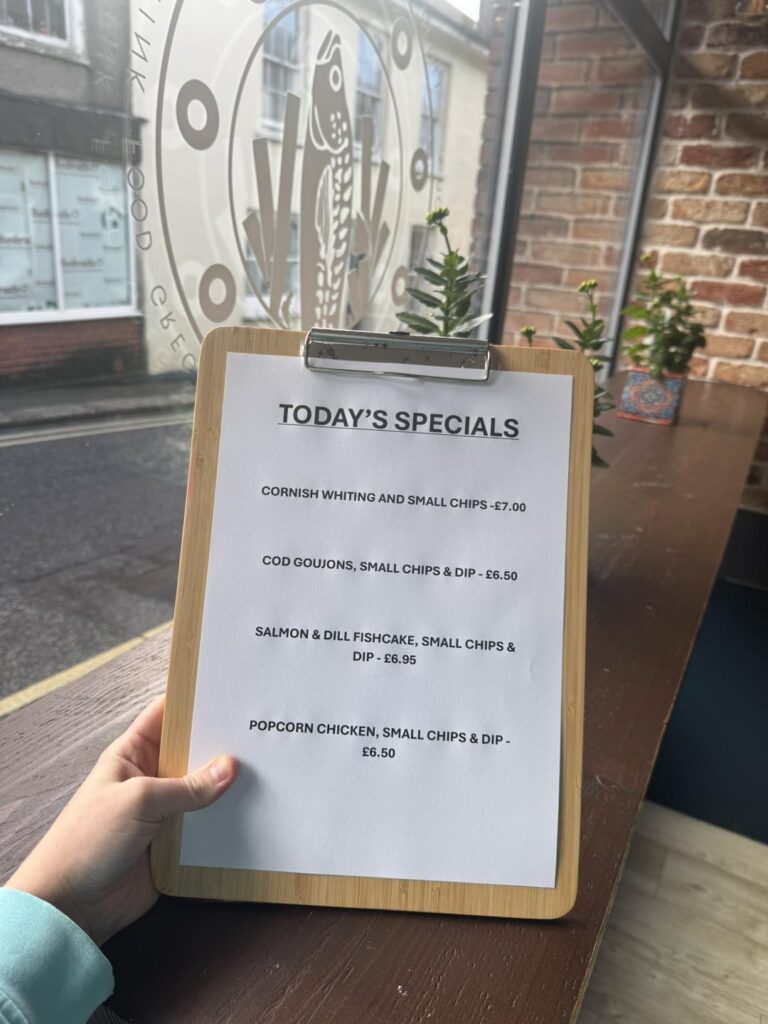
In Redruth, Cornwall, Greg and Lou’s has taken a different approach by tapping into local supplies. Since 2021, the shop has offered a rotating “Cornish fish special”, featuring species such as hake, pollock, whiting, lemon sole and rock salmon, depending on availability. The deal – around 4-5oz of fish with small chips for £7.25 – has grown from a slow start into one of the business’s USPs.
“People just ask for the Cornish special now,” says owner Louise Honeywell Watkins. “Because we’ve been doing them for such a long time, it’s what we’re known for. Customers trust them and are a lot more open to trying anything now.”
Cod, by comparison, has risen from around £165 a case to £330, putting pressure on margins even with an £8.40 cod and chips price — among the cheapest in the area.
“It does need to go up,” admits Louise. “But we’re busy. I’d rather have volume and customers in buying other things as well, than price ourselves out.”
Smaller portions, such as mini cod or haddock and chips for £8.75, also help bridge the gap, but it is the flexibility of alternative species that keeps the business resilient. “Times are changing,” she says. “People want value, but they still want quality, so you have to offer both.”
Limits
For some operators, however, even alternatives come with limits. At Whiteheads Fish & Chips in Hornsea, East Yorkshire, owner Geoff Whitehead says that at £325 for a box of cod, takeaway prices have reached their absolute ceiling.
“We’ve completely and utterly hit the limit of what we can charge in the takeaway,” he says, stating that cod remains at £14 and haddock slightly under at £12. Restaurant prices have risen higher to reflect added value such as tea, bread and butter, with a cod meal priced at £17.50 and haddock at £16.50.
Geoff has tested species including coley and tilapia, with mixed results. Coley’s dark fatty layer puts customers off, while tilapia’s more “earthy” taste, as Geoff describes it, divides opinion despite its sustainability and lower price point. “If cod or haddock are on the menu, people will choose that,” he says. “And if it’s not, they will go elsewhere.”
Instead, savings have had to come from elsewhere: restructuring management, cutting staff perks, postponing equipment investment, and even changing plate shapes to reduce the amount of chips staff give away. “For the first time in many years, it’s cost me £10,000 just to stay open this last quarter,” says Geoff.
Back at the wholesale level, Bobby says this kind of adaptation is becoming the norm rather than the exception. “In tough times, good businesses innovate and adapt and we are certainly seeing that with shops looking at their marketing strategy, portion sizes and alternative species.”
Sales of hake, saithe, tilapia and pollock are increasing week on week, and wholesalers like Smales are increasingly supporting shops with information and materials to help explain those choices to customers. Bobby adds: “With a small amount of effort from the shop, their customers really can be educated that there are other options to cod or haddock that still give a great fish and chip experience but at a more competitive price point.”
Despite the challenges, Bobby remains confident in the long-term value of the sector and says that shops have a lot to champion. “Despite the high costs to produce fish & chips, we still have the best quality, unprocessed, value for money takeaway product on the high street; cooked to order every day by family businesses who invest in their shops and communities. That is the message the whole industry needs to convey to the public as loudly as possible.”
Lots Marr fish in the sea
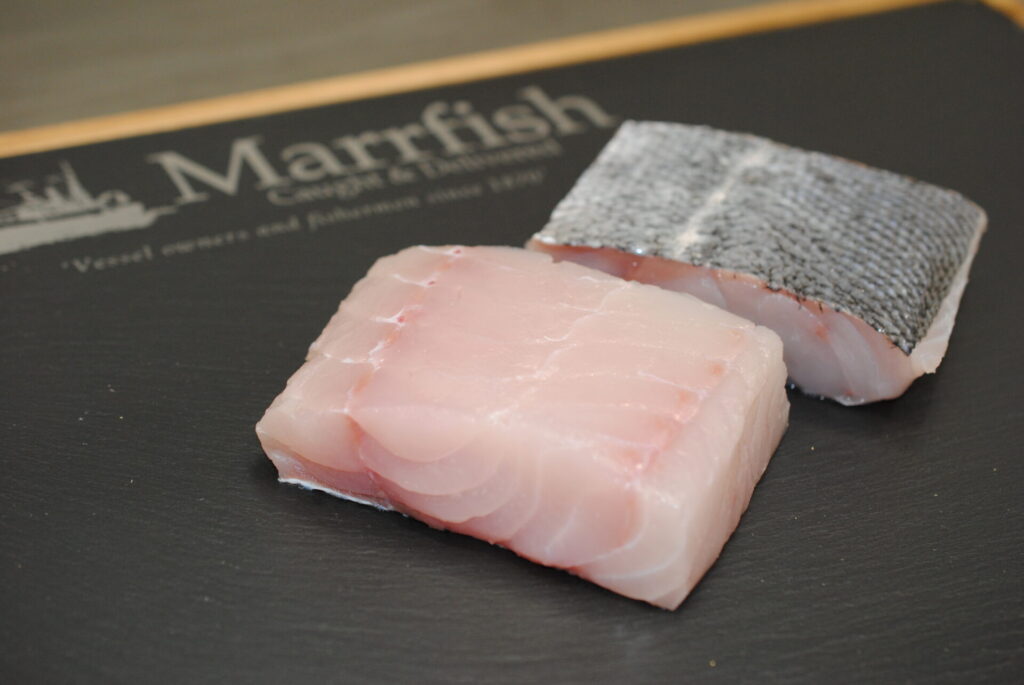
Marrfish, which owns over 30 vessels operating in the North Sea, advocates the use of UK sourced, lesser-known seafood species, such as coley, gurnard, hake and megrim, which it says are often overlooked but are versatile and flavoursome.
Hake, which has a similar, mild white flesh to cod, is a great example of a fish that is now in demand and trending on menus. Twenty years ago, Marrfish sold 100kg of hake a week, now sales have increased to 300kg a day. Another popular alternative it recommends is coley.
Ben English, commercial director, Marrfish, comments: “With a very similar flavour to cod, it is often seen as inferior, but for this reason it is less expensive. Then there’s Scottish pollock which is widely available and considered more sustainable than cod. With a milder flavour, and slightly firmer than cod, it’s often used in fishcakes or fried. Whiting is delicate in flavour but works well in batter, and then there’s megrim, or cornish, Sole; a mild flatfish which is great grilled or fried.”
Striking a balance between making sure stocks are sustainable long term against economic impacts is not an easy task, says Ben, adding: “If we were to shift our consumption away from cod and haddock to these alternatives, we would quickly over exploit them as well, so it’s about finding a balance between the traditional and the underused. Try running specials alongside your normal offering to ease the pressure on stocks and encourage trial by customers who may have never considered some of these varieties.”
Marrfish 01279 501051 www.marrfish.co
Delivering a seafood experience
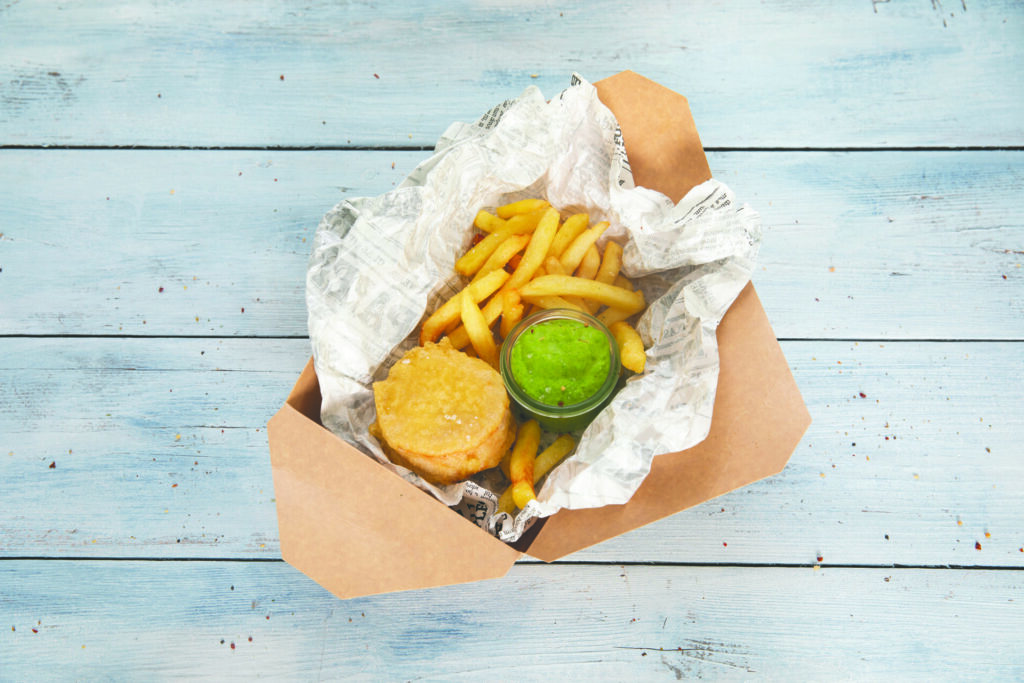
With shops looking at how they can broaden their seafood offering, Gavin McLean, UK general manager at 555 Amanda, suggests different formats, more flexible portion sizes, or dishes that sit alongside fillets rather than competing with them.
“Our Amanda Roe and Salmon Roulade have become a strong option for fish and chip shops because it’s familiar, versatile and easy to introduce,” he says. “We’re seeing it used as bites, nuggets, burgers and sausages, giving customers something recognisable but a little different.
“These formats help operators manage portion control and costs more effectively, while still delivering a proper seafood experience. Customers feel they’re getting value and choice, without shops having to rely solely on large fillets.”
Gavin also notes a growing interest in premium-tasting add-ons that help increase spend per customer, for example its ready made Lobster Bisque. “It delivers indulgence and comfort, but without the labour and cost of making it from scratch,” he adds.
“Ultimately, it’s about giving fish and chip shops practical ways to adapt. Products like cod roe, salmon roulade and lobster bisque help shops offer variety, protect margins and maintain quality, while still giving customers the seafood flavours they expect.”
555 Amanda www.555amanda.co.uk
Labels eliminate mix-ups
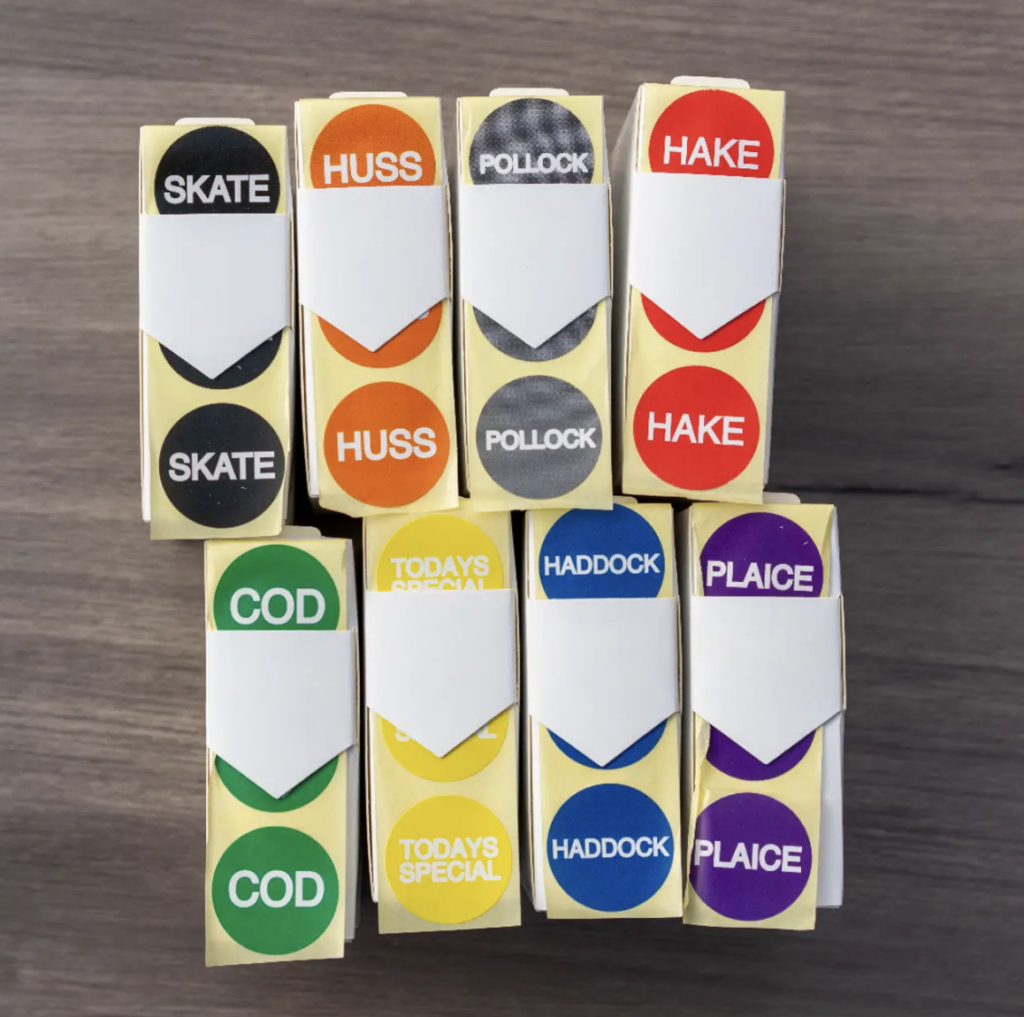
When handling multiple fish species, clear identification is essential. Ceres Fish Species Labels provide a quick, professional alternative to handwritten notes, helping staff and customers instantly identify each order and avoid mix-ups.
Available in seven species, including hake, pollock and plaice, plus a “Today’s Special” option, the labels are naturally compostable and are supplied in rolls of 1,000 in a convenient dispenser carton for easy application.
Ceres 0845 3711 522 www.ceres.shop
Recent Posts
- World Cup lifts pubs but restaurant sales dip in flat June for hospitality


- Takeaways and restaurants excluded from business rates cut

- Two chippies win one-to-one support from Frymax
- Bellingham and Rogers mural gives Birmingham chip shop a 30% boost to trade

- Fast food footfall falls as chicken continues to gain ground