
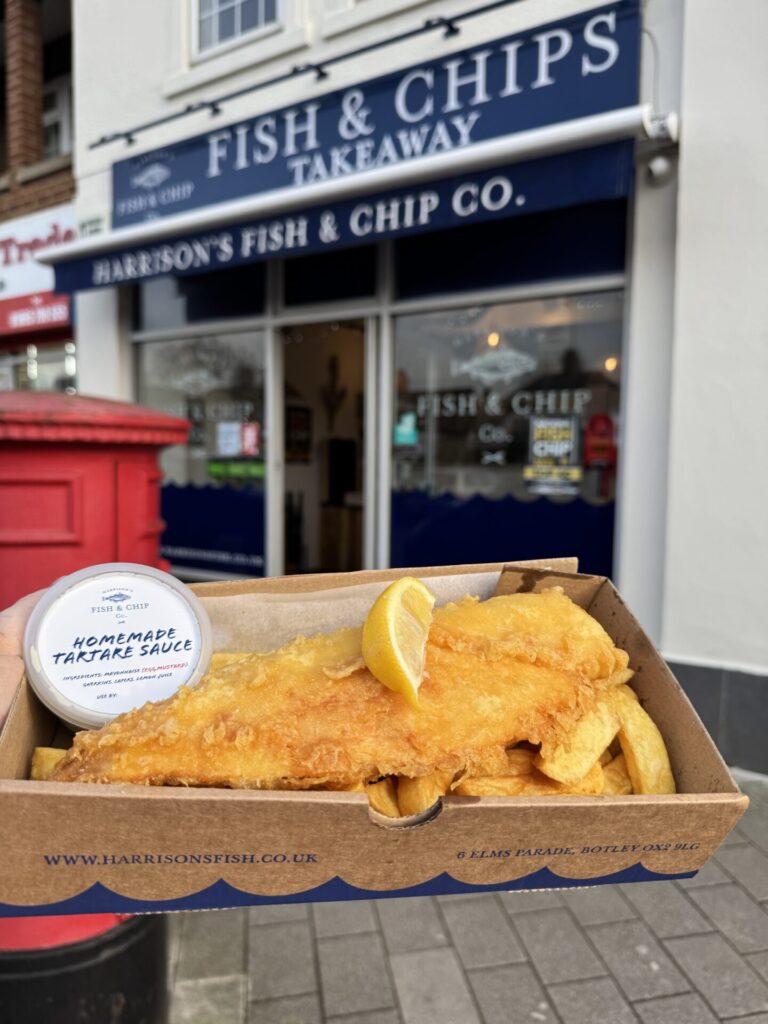
With cod and haddock becoming premium fish, Harrison’s Fish & Chips in Botley, Oxford, has diversified to stay competitive
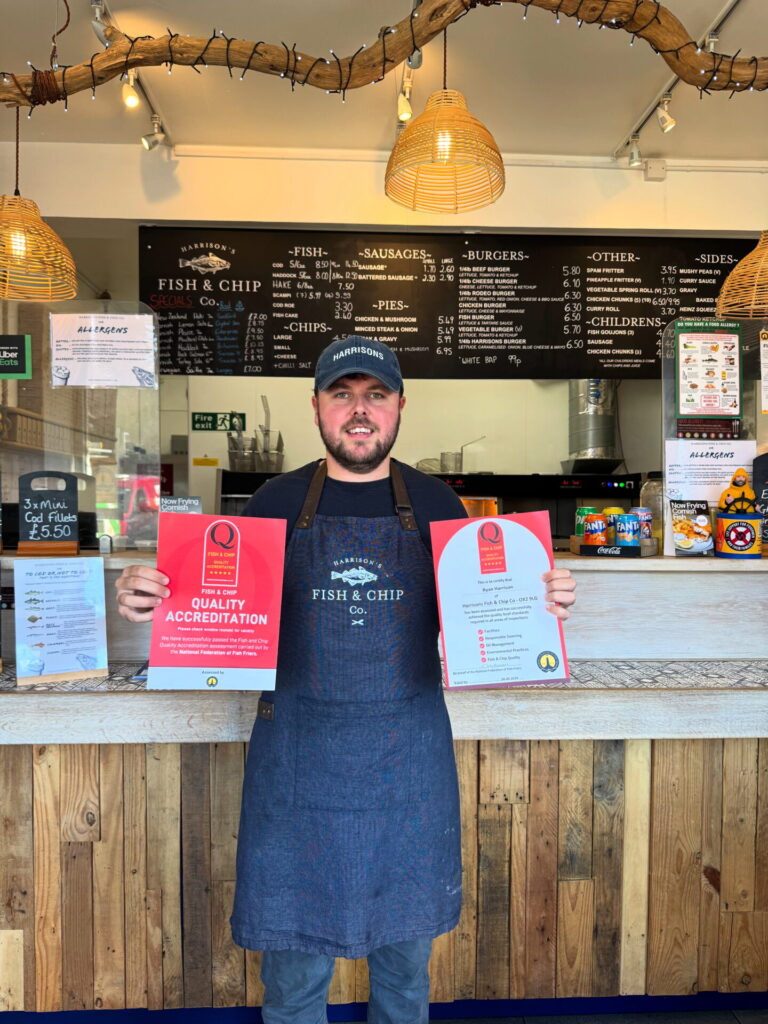
“When we first opened, we were selling a portion of cod for £5. Now it’s double that,” says Ryan Harrison, owner of Harrison’s Fish & Chips as he reflects on the impact of rising fish prices over the past four years. “I’d love to have worked in fish and chips before Covid, everyone says how good it was and how much money everyone was making. Since we started, it’s just been one crisis after another.”

Ryan opened his takeaway, a former post office in a parade of shops, in the summer of 2021 and has spent most of that time navigating a changing fish market. While many operators have struggled to keep cod and haddock on the menu, he has responded by expanding his range of species, a move that he believes has both protected trade and strengthened his reputation as a fish specialist.
“We’ve always done a regular cod at around six ounces and a large at 10–12,” Ryan explains. “But those big fillets are becoming quite scarce and, when I can get hold of them, it’s actually so expensive that it’s sometimes cheaper to buy two regulars. I’ve managed to secure 8–10oz cod and slightly reduce the price, but it’s getting harder.”
He describes cod as “becoming a premium fish” and believes the industry needs to adapt to that reality. “You either pay the premium price or adapt your buying habits.”
That’s the point Ryan reached about a year ago when he attended a trip to Newlyn Fish Market in Cornwall with the National Federation of Fish Friers (NFFF). “It was all about promoting rock salmon, because it hadn’t been on menus for years and fishermen weren’t getting much for it,” he says. “That visit made me realise there were good alternatives that weren’t being used.”
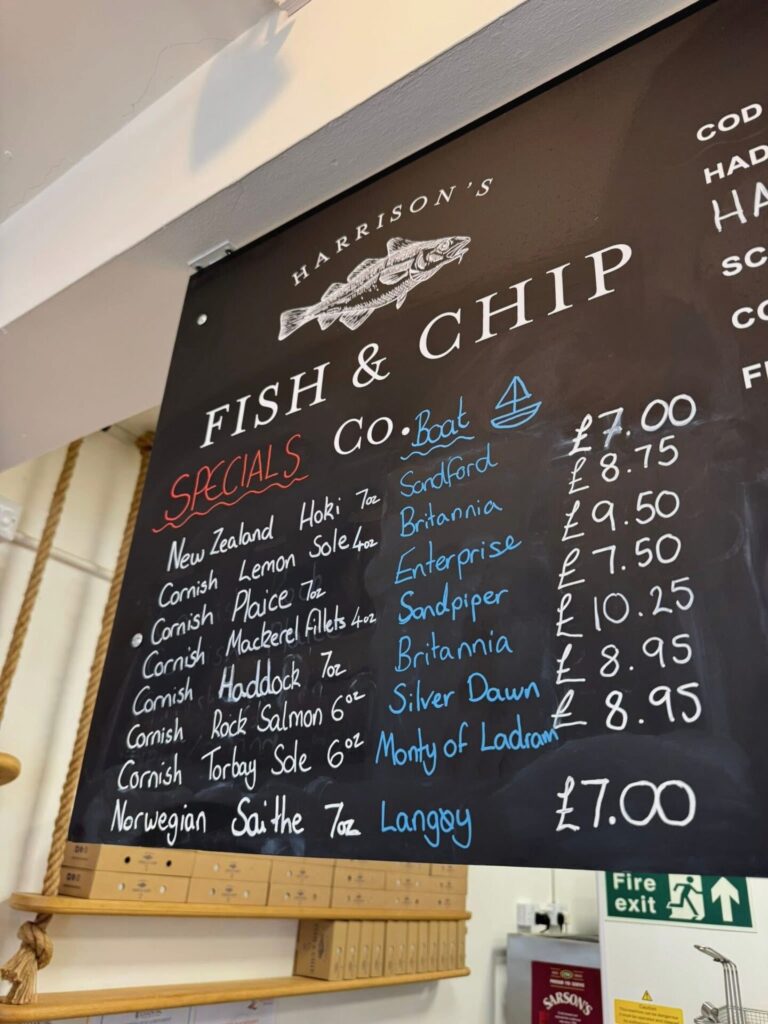
Since then, Ryan has worked with a Cornish supplier in St Ives to further expand his menu to include species such as lemon sole, plaice and mackerel, as well as some haddock. “They are slightly more premium, but it helps make my regular cod and haddock look a lot better value,” says Ryan. “For instance, I’m selling Norwegian haddock for £8.50, whereas freshly caught Cornish haddock is £10.25. We find some of our customers would rather pay the extra for a more premium product that helps support the local fishing industry.”
Multiple price points

While Cornish species cater to the premium end, others fill the value gap, creating a menu that spans multiple price points, allowing customers to choose without compromising quality.
“T. Quality has started supplying New Zealand hoki, which I think is a brilliant fish,” says Ryan. “Taste-wise, it’s very nice, it has a medium flake, and, although it’s thinner than cod, it’s longer, so it’s still a good size. We sell it for £7.”
By securing enough stock in advance, Ryan has been able to keep that price stable. “Our chips are £2.99 which means I can offer fish and chips for under £10 for the rest of the year. That’s really important as people want to feel there’s still an affordable option.”
Other additions include Norwegian saithe and South African hake, both MSC certified. “Saithe is a harder to sell partly because not many people have heard of it. The colour’s a little darker than cod and haddock too, so we do pre-warn the customer of that, but it’s got a great taste, very similar to haddock. When I first tasted saithe, I actually thought it was haddock, so that’s what we say to customers – it’s a better value alternative to haddock.”
Hake, meanwhile, has started to gain traction. “I’ve had it on the menu for a couple of years, but the price used to be close to haddock, so there was no reason to push it. Now that the gap has widened, people are trying it more.”
Education
Ryan admits that convincing customers to move away from cod and haddock required education. “In Oxford, it’s mainly a cod area, but once people take the plunge, they do generally order it again. Hoki, for example, I’m selling a 6kg slab each week, which is about 30 to 35 fillets.”
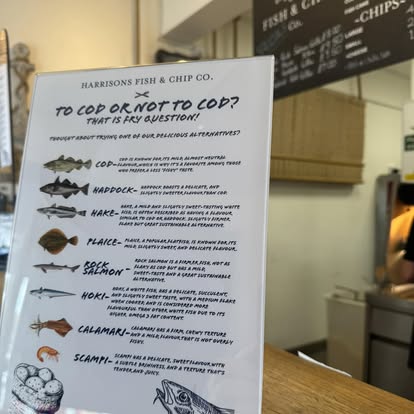
Also helping to guide customers towards more cost-effective alternatives is a taste board displayed at the front of the shop with a picture of each fish alongside a short flavour description. “It helps customers see that hake looks similar to cod, and they can read what the difference in taste is,” explains Ryan.
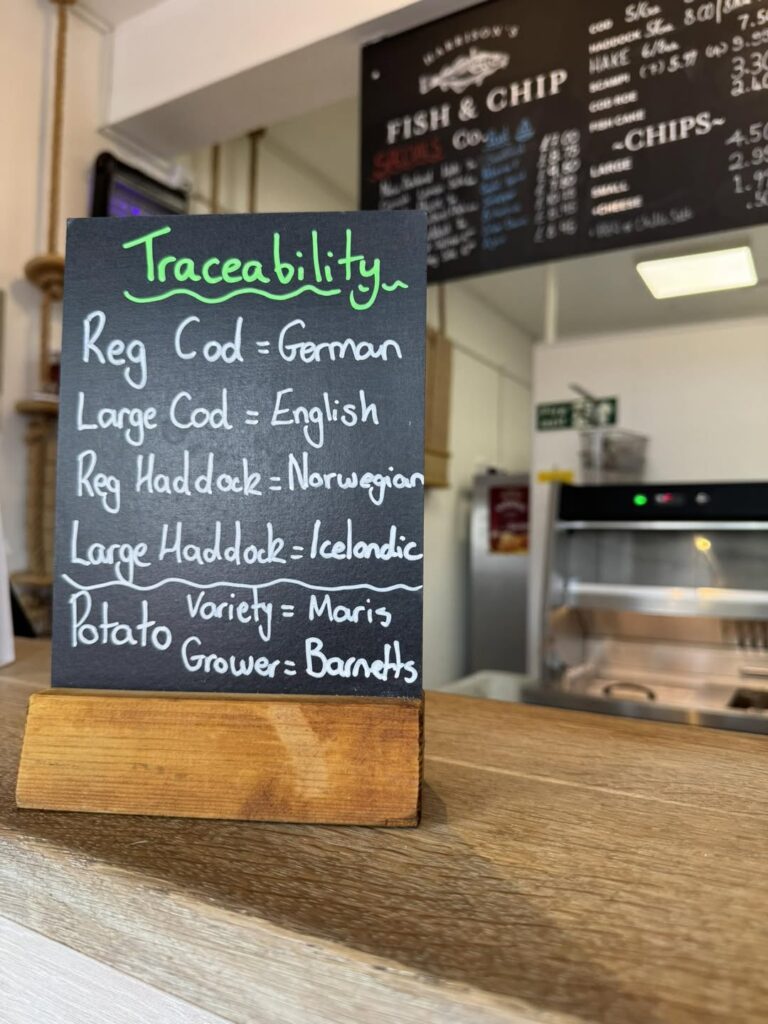
This level of transparency extends to the fish’s origin too, with a similar board detailing which boat catches which fish. “People are intrigued,” he adds. “If there are children in a group, we tell them to pop onto vesselfinder.com where they can see where each boat is at that moment. It’s quite cool and it gets children engaged.”
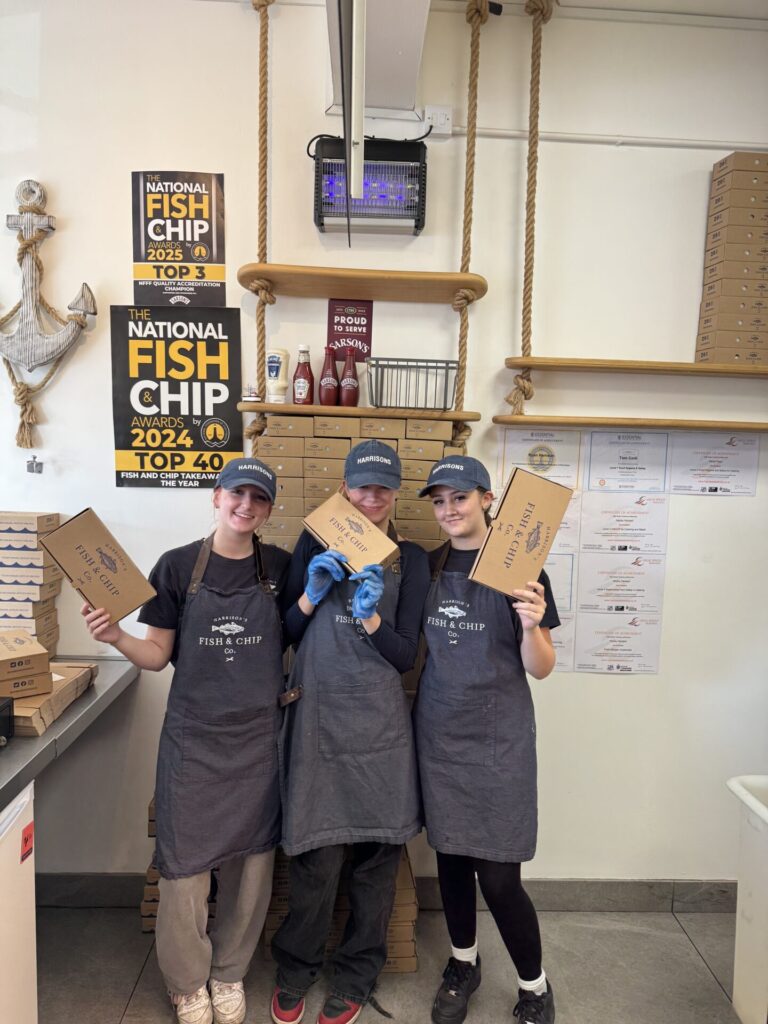
While handling so many different species might prove daunting for some operators, Ryan has it down to a fine art, easily identifying fish by their distinct features, such as the skin-on haddock, the cut in pin bone-in cod, and the size and shape of other species like rock salmon, plaice and lemon sole. To ensure customers know exactly what they’re getting, the team labels each order using printed stickers or handwritten notes on the boxes during busy periods.
At a time when some shops are scaling back their fish offer, Harrison’s has gone the other way. “We’re about 80% fish sales,” Ryan says. “We used to do pizzas, but because we’re so busy with the fish side, it became a bit of a pain, so we stopped that. Fish is what people come for.”
The rest of the menu includes standard chip shop items like sausages and pies, but Ryan says those customers wouldn’t typically buy fish anyway. “We also use offcuts for children’s fish goujons and fish burgers, so nothing goes to waste. If I don’t have trimmings, I’ll cut down a fillet and get two burgers out of it, so I’m actually making more money by selling two fish burgers.”
Ryan believes that broadening his fish offering has helped keep trade steady despite rising cod and haddock prices. “If I’d stuck with just those two species, I think we’d be struggling,” he says. “This way, we can justify the prices. Customers understand that cod’s expensive, but we can say, ‘Here’s hoki at £7,’ or ‘Here’s saithe at a better price.’”
The rethink hasn’t protected the business completely as Ryan has still noticed a drop in footfall compared to last year. However, sales remain strong overall. “We’re still busy, and some weeks we have record days for no obvious reason. I think customers respect that we’re not cutting corners, we’re just adapting.”
Discounts
Harrison’s has resisted the temptation to chase volume by offering discounts. “We don’t do special offers,” says Ryan. “Someone once told me, if you offer a brilliant product, why discount it? That’s stuck with me.”
Instead, he focuses on consistency and customer communication. “We explain the differences between species, where they’re from, and why they’re priced how they are. People are reasonable when you’re transparent.”
Four years in, Harrison’s continues to prove that diversification can strengthen a traditional chippy rather than dilute it. “I feel like it’s an experience we’re offering now,” says Ryan. “Customers come in and can see all these different fish. And we find it a lot now that people are coming in and asking, ‘what specials have you got today?’. By offering alternatives, we’re not losing customers.
Ryan is confident that Harrison’s is on the right track, as customers continue to come through the door. “Eighty percent of new businesses fail within five years – we’re only a couple of months away from that, and we’re definitely not going anywhere,” he says.
Recent Posts
- World Cup lifts pubs but restaurant sales dip in flat June for hospitality


- Takeaways and restaurants excluded from business rates cut

- Two chippies win one-to-one support from Frymax
- Bellingham and Rogers mural gives Birmingham chip shop a 30% boost to trade

- Fast food footfall falls as chicken continues to gain ground